
In This Article
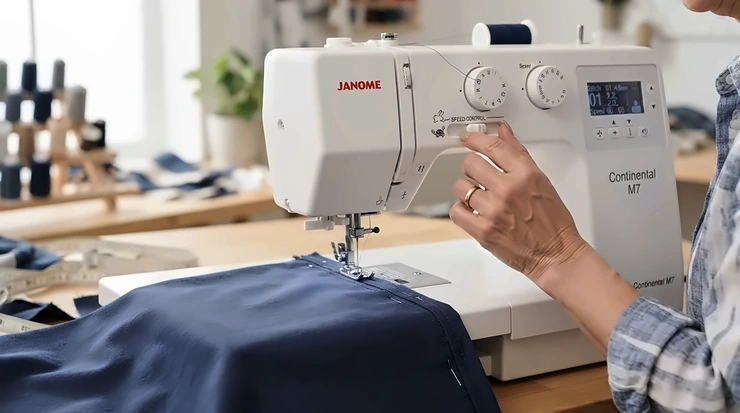
Stand in front of a computerised sewing machine for beginners for the first time and it can feel a bit like sitting in the cockpit of a plane you’ve never flown. Buttons. A little screen. A dial that promises sixty different stitches when, frankly, you only know what a straight line looks like. Here’s the reassuring bit: that screen isn’t there to intimidate you, it’s there to do the maths so you don’t have to. A computerised machine reads the stitch you’ve picked, works out the length and width for you, and quietly gets on with tensioning the thread while you focus on the actual sewing.
This guide is built around real UK-available models, from a tidy £370-ish entry machine right up to a quilting-grade workhorse with a screen the size of a phone. We’ll walk through seven genuine options, explain what “guided stitch selection” and a beginner-friendly digital display actually change about your first month of sewing, and be honest about the learning curve — because computerised doesn’t mean instant, it means the machine carries more of the load while you carry the rest.
Quick Comparison
| Machine | Stitches | Best For | Price Guide |
|---|---|---|---|
| Janome 230DC | 30 | Absolute first-timers on a budget | £350-£450 range |
| Brother Innov-is A16 | 16 | Guided stitch selection, ease of use | £250-£320 range |
| Janome 360DC | 60 | Beginner-friendly digital display | £450-£550 range |
| Singer Quantum Stylist 9960 | 600 | Advanced sewists, decorative work | £350-£450 range |
| Brother Innov-is NV1300 | 182 | Serious quilting and dressmaking | £900-£1,100 range |
There’s a genuine trade-off buried in that table: more stitches isn’t automatically better for someone who picked up a needle for the first time last week. The Janome 230DC and Brother Innov-is A16 win on simplicity precisely because they don’t drown you in choice, while the Singer Quantum Stylist 9960 and Brother Innov-is NV1300 earn their keep by giving room to grow once basic seams stop feeling like a small miracle. Price, in this category, tracks features and workspace far more than it tracks “quality” in any simple sense.
Just one click — help others make better buying decisions too!😊
Top 7 Computerised Sewing Machines for Beginners: Expert Analysis
1. Janome 230DC — lightest learning curve on a budget
The 230DC is Janome’s answer to “I just want to sew a hem without a physics degree.” It brings 30 built-in stitches, including three one-step buttonhole styles, all selected via push buttons rather than the flick-through menus you’ll find on pricier machines.
Its horizontal full rotary hook and die-cast aluminium body mean the internals are built to a standard well above what the entry price suggests, and the maximum sewing speed of 820 stitches per minute gives you plenty of room before you’d ever outgrow it purely on speed. Based on the spec comparison with its rivals, the 230DC’s real advantage is restraint: fewer stitches means less scrolling and fewer wrong turns while you’re still learning where the bobbin goes.
Reviewers consistently note that the top-loading bobbin and automatic needle threader remove two of the classic first-week frustrations, and the included extension table makes it genuinely usable for small quilting projects, not just repairs. What most buyers overlook is that this machine is marketed by multiple UK retailers as suited to both beginners and more experienced sewers returning to the hobby — it’s not a toy you’ll bin in six months.
Pros:
- ✅ Simple push-button interface with only 30 stitches to learn
- ✅ Automatic needle threader and top-loading bobbin
- ✅ Sturdy die-cast aluminium body built to last
Cons:
- ❌ Limited decorative stitch library for creative projects
- ❌ No embroidery function if you want to add monograms later
At around £350-£450 (check current price, as it varies by retailer and bundle), the Janome 230DC represents solid value for anyone who wants a genuinely computerised experience without paying for stitches they’ll never use.
2. Brother Innov-is A16 — best guided stitch selection for total beginners
If your biggest fear is threading the needle wrong, the A16 was engineered specifically to remove that fear. Its jog dial lets you select each of 16 stitches with ease, and Brother’s advanced threading system can thread the needle in seconds with only one hand.
What the spec sheet won’t tell you, but reviewers note, is how much that guided stitch selection actually changes the sewing experience day to day: turn the dial, and the LCD screen shows stitch width and length at a glance, with the recommended presser foot displayed alongside it. You’re never guessing which foot to fit — the machine tells you. This is precisely the kind of decision-offloading that separates computerised machines from mechanical ones, and for someone who’s never sewn before, it’s the difference between confidence and constant second-guessing.
Reviewers consistently praise the A16’s needle up/down function for pivoting corners cleanly, and the three automatic buttonhole styles mean your first garment project won’t stall at the buttonhole stage, which is where a huge number of beginners give up. It handles denim, cotton, and stretch fabrics without complaint, though it won’t win any prizes for decorative embroidery-style stitching.
Pros:
- ✅ Guided stitch selection shows the right foot automatically
- ✅ Advanced one-handed needle threader, genuinely faster than rivals
- ✅ Three-year Brother parts and labour warranty for peace of mind
Cons:
- ❌ Only 16 stitches, so creative range is narrow
- ❌ No wide extension table included as standard
At around £250-£320 (prices may vary — check current price), the Brother Innov-is A16 is the machine we’d point a nervous first-timer towards without hesitation.
3. Janome 360DC — best beginner-friendly digital display
Where the A16 keeps things minimal, the 360DC opens the door wider. It offers 60 built-in stitches, including 7 automatic one-step buttonholes, all navigated through a backlit LCD screen that makes stitch selection clear and straightforward.
Here’s what to weigh: a backlit display sounds like a small thing until you’re sewing in a dim corner of the spare room at 9pm and can actually read the settings without squinting. Based on the spec comparison, the 360DC’s six-level adjustable foot pressure and seven-piece feed dog also give it noticeably better control over varied fabric weights than the 230DC below it — useful once you move from cotton offcuts to actual garment fabric.
Reviewers consistently describe it as a natural next step for beginners moving on from a basic model, and its free-arm conversion makes cuffs and trouser hems far less fiddly than on a flatbed-only design. The trade-off is that 60 stitches means more menu-scrolling than the A16, so it suits someone who’s done a handful of projects already rather than someone sewing their very first seam tonight.
Pros:
- ✅ Backlit LCD display genuinely easier to read than basic screens
- ✅ 60 stitches with room to grow into decorative work
- ✅ Free-arm/flatbed conversion for sleeves and hems
Cons:
- ❌ More menu depth than true first-timers may want
- ❌ Heavier at roughly 5.6kg than some ultra-portable rivals
Around £450-£550 at the time of research, the Janome 360DC rewards buyers who’ve already got a few projects under their belt and want a display that keeps up.
4. Singer Quantum Stylist 9960 — best for advanced sewists who want headroom
This is where the category shifts from “learning to sew” to “a machine that will outlast your patience for buying new ones.” The 9960 carries 600 built-in stitches, including 5 alphanumeric fonts and 13 automatic 1-step buttonholes.
On paper this means overkill for a beginner, and honestly, that’s a fair read. Reviewers consistently note that it may take most users a while to get the hang of this computerised machine, though once mastered it handles projects from home décor to garment production to quilting with ease. What most buyers overlook is that the huge stitch count also brings genuine performance benefits beyond novelty — it sews evenly and securely even on heavy fabrics, handling vinyl and leather competently, which a 16-stitch entry machine simply can’t promise.
Aggregated review sentiment is consistently strong on build quality and speed, with a top sewing speed of 850 stitches per minute that keeps pace with dressmaking and quilting alike. The honest verdict: if you’re brand new to sewing, this is more machine than you need on day one — but if you already know you want to chase decorative and quilting work seriously, buying it now saves you an upgrade later.
Pros:
- ✅ Enormous 600-stitch library for decorative and quilting work
- ✅ Handles heavy fabrics including denim and vinyl confidently
- ✅ Colour touchscreen previews stitch width and length live
Cons:
- ❌ Steep learning curve for a true first-time sewer
- ❌ Limited throat space for large quilting projects
Priced around £350-£450 in the UK (check current price, as US and UK listings vary), the Singer Quantum Stylist 9960 suits ambitious beginners who plan to grow fast, not linger at basics for long.
5. Brother Innov-is F420 — best for advancing beyond the basics
The F420 sits in that useful middle ground Brother describes as working for both novice and more advanced sewists, and the spec sheet backs that up. It offers 180 built-in stitches, including utility, heirloom, stretch and decorative options, plus 10 buttonholes, auto thread tension, and Brother’s Square Feed Drive System for consistent fabric feeding.
Here’s what to weigh: auto thread tension is a genuinely underrated feature for beginners, because tension problems are one of the most common causes of bunched, ugly stitching, and a huge source of frustration in month one. Based on the spec comparison, the F420’s knee lift also frees both hands for pivoting fabric, a feature usually reserved for machines twice this price.
Reviewers consistently mention how quiet the motor runs even during long evening sessions, and one buyer specifically praised the touch screen as easy to use, alongside the automatic thread cutter and needle threader. The honest trade-off is cost: this machine asks a genuine beginner to pay a premium for headroom they may not use for a year or two.
Pros:
- ✅ Automatic thread tension removes a classic beginner headache
- ✅ Knee lift frees both hands for pivoting fabric
- ✅ Whisper-quiet motor, comfortable for long sewing sessions
Cons:
- ❌ Pricier than most true beginner machines
- ❌ 180-stitch menu takes time to fully learn
At around £650-£700 (check current price), the Brother Innov-is F420 is the machine for beginners who are fairly confident they’ll stick with sewing long-term.
6. Brother Innov-is M380D — best computerised sewing machine for embroidery
If part of the appeal of a computerised sewing machine for embroidery is being able to personalise gifts and clothing without a separate machine, the M380D earns its place here. It combines 181 sewing stitches with 200 built-in embroidery designs, 11 embroidery fonts and 4 lettering fonts, all navigated through a colour LCD touchscreen.
What most buyers overlook about combo machines like this is that embroidery genuinely is a separate skill from garment sewing — hooping fabric correctly, choosing stabiliser, and managing thread tension for dense stitching all have their own learning curve on top of ordinary sewing. Reviewers consistently note that the advanced needle threading system and automatic thread cutter make the sewing side approachable, and the touchscreen lets you edit designs directly on the machine rather than fiddling with a laptop.
Where this model genuinely shines for a beginner is the USB port for importing designs and the ability to combine embroidery patterns on screen, meaning your creative options don’t stop at what’s built in. The honest caveat: embroidery machines are a bigger investment of both money and patience than a pure sewing machine, so this suits someone who already knows personalisation is their goal, not someone dipping a toe in.
Pros:
- ✅ 200 built-in embroidery designs plus USB import for more
- ✅ Colour touchscreen makes on-machine design editing simple
- ✅ Automatic thread cutter speeds up both sewing and embroidery
Cons:
- ❌ Embroidery has its own learning curve beyond basic sewing
- ❌ Bulkier and pricier than sewing-only alternatives
In the £700-£900 range at the time of research, the Brother Innov-is M380D is the pick for beginners whose real goal is personalised, decorative work.
7. Brother Innov-is NV1300 — best premium machine for serious quilting
The NV1300 is where “beginner” stretches to mean “beginner with ambitious long-term plans.” It offers a genuinely large 8.3-inch workspace to the right of the needle, 240 built-in stitches, and thread tension adjustable in 0.2 increments, alongside a fully automatic thread tension system and a memory function that saves custom stitch combinations.
Based on the spec comparison, that 0.2-increment tension control is a meaningfully finer degree of adjustment than most beginner machines offer, which matters once you start working with tricky fabrics like silk or heavyweight denim in the same week. What the spec sheet won’t tell you, but reviewers note, is how much the multi-directional sewing function, allowing stitching in four directions for decorative stitches up to 40mm wide, opens up appliqué and quilting work that simpler machines flatly can’t attempt.
Reviewers consistently highlight the knee lift for hands-free presser foot control and the large workspace as genuine time-savers on bigger projects like bed quilts or curtains. The honest verdict: this is serious kit for someone who’s decided quilting or heavy dressmaking is their long game, not a casual first purchase.
Pros:
- ✅ Large 8.3-inch workspace ideal for quilts and big projects
- ✅ Ultra-fine 0.2mm tension adjustment for tricky fabrics
- ✅ Multi-directional stitching for advanced decorative work
Cons:
- ❌ Premium price well above most beginner budgets
- ❌ Overkill if you only plan simple repairs and garments
Typically in the £900-£1,100 range (check current price), the Brother Innov-is NV1300 is the “buy once, grow into it for a decade” option.
Practical Usage Guide: Getting Started in Your First 30 Days
The single biggest predictor of whether a new machine gets used or gathers dust isn’t the machine itself — it’s the first month. Start by threading exactly in the order your manual specifies; computerised machines are actually more forgiving than mechanical ones here because most, like the Brother Innov-is A16 and Janome 360DC, will flag an obvious threading error before you even start sewing.
In week one, sew nothing but straight lines on scrap fabric until your tension looks even on both sides. Resist the urge to explore all 60 or 600 stitches immediately — pick five you’ll actually use (straight, zigzag, stretch, buttonhole, overcast) and get comfortable with those first. Oil isn’t usually needed on modern computerised machines, but do clean lint from the bobbin area weekly; it’s the most common cause of skipped stitches in month one. Finally, keep your manual open on your phone rather than in a drawer — most beginner mistakes are solved in under a minute once you know which button actually does what.
Real-World Scenarios: Which Machine Suits You?
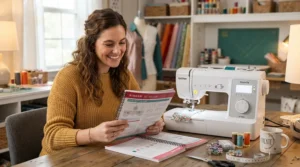
Picture Priya, a university student with a small desk and £300 to spend, mostly repairing clothes and occasionally upcycling charity shop finds — the Janome 230DC or Brother Innov-is A16 fit both her budget and her limited storage space perfectly.
Now picture Dave, newly retired, who’s decided he wants to make quilts for every grandchild over the next five years — the workspace and stitch precision of the Brother Innov-is NV1300 will save him from an expensive upgrade halfway through year one. And picture Fatima, who wants to sew clothes for her toddler and stitch their name onto everything — the Brother Innov-is M380D‘s combined sewing-and-embroidery function solves two hobbies with one machine, even though it costs more upfront than a sewing-only model.
Problem → Solution: Common Beginner Sewing Machine Struggles
Skipped stitches are almost always down to an incorrectly inserted needle or the wrong needle type for your fabric — swap to a fresh needle matched to your fabric weight before assuming the machine is faulty. Puckered seams usually mean tension that’s too tight; models like the Brother Innov-is F420 with automatic tension largely sidestep this, but on manual-tension machines, loosen the top tension by small increments and test on scrap first.
Thread bunching underneath the fabric (“birds’ nesting”) is nearly always a bobbin threading error — rethread it exactly per the manual, checking the bobbin case direction. And if your buttonholes come out uneven, it’s rarely the machine’s fault; it’s usually the fabric shifting under the foot, which a stabiliser strip under lightweight fabric fixes in seconds.
How to Choose a Computerised Sewing Machine for Beginners
- Decide your project type first. Garment repairs need far less machine than quilting or embroidery — don’t overbuy.
- Count the stitches you’ll realistically use. A 16-stitch machine covers 90% of beginner projects; extra stitches are for later ambition, not week one.
- Check the throat space. Around 15cm to 17cm is comfortable for dressmaking, while quilters need 25cm or more.
- Weigh needle threader and bobbin systems. These two features alone determine most of your daily frustration or ease.
- Confirm UK parts availability. A machine you can’t service in five years is a false economy, however cheap it looks now.
- Read genuine buyer feedback, not just marketing copy. For a good starting point, Which?’s tested guide to the best sewing machines for beginners is a useful independent cross-check before you commit.
- Set a realistic budget band, then stick close to it. Spending more rarely fixes impatience with the learning curve — practice does.
Guided Stitch Selection Explained: What It Actually Does
Guided stitch selection is the feature that quietly does the most work for a nervous beginner, even though it rarely gets top billing on a spec sheet. In practice, it means the machine automatically sets stitch length and width the moment you choose a stitch, and — on models like the Brother Innov-is A16 — tells you which presser foot to fit as well.
The spec sheet won’t tell you this, but the real value is removing decision fatigue at the exact moment you’re already juggling fabric, thread, and nerves. On mechanical machines, three separate dials need manual, correct adjustment before a single stitch looks right; guided selection collapses that into one choice. It’s the single clearest argument for choosing computerised over mechanical as an absolute beginner.
Computerised Sewing Machine for Embroidery: What Beginners Should Know
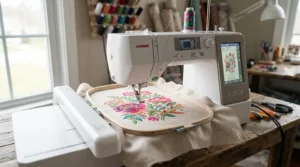
Buying a computerised sewing machine for embroidery as your first machine is a bigger commitment than it looks, and it’s worth being honest about that upfront. Embroidery on machines like the Brother Innov-is M380D involves a separate skill set: hooping fabric taut and square, choosing the right stabiliser for the fabric weight, and managing thread breaks mid-design without losing your place.
That said, modern embroidery machines have narrowed the gap considerably. USB and wireless design transfer, plus mobile-app design tools, mean you’re no longer limited to whatever’s pre-loaded. On paper this means a beginner genuinely can start personalising projects within a few weeks — but budget extra time (and stabiliser) for your first handful of designs while you learn hooping. For further context on the craft itself and its long history, Wikipedia’s overview of embroidery is a useful primer before you invest in hoops and stabiliser.
Computerised Sewing Machine for Advanced Sewists: When to Upgrade
Not every advancing sewist needs a new machine, but some genuinely do — and it’s worth knowing the signs. If you’re consistently running out of stitch options, need finer tension control than 0.5mm increments allow, or find yourself hand-finishing decorative work your current machine can’t attempt, that’s when a computerised sewing machine for advanced sewists like the Singer Quantum Stylist 9960 or Brother Innov-is NV1300 earns its price.
Here’s what to weigh: reviewers consistently note that these machines reward sewists who already know what they want to make, rather than those still exploring the hobby. Buying advanced capacity before you need it often just means paying for menu depth you’ll ignore for a year — better to outgrow a simpler machine and upgrade with clear intent than to guess early.
Features That Actually Matter (And Those That Don’t)
A beginner-friendly digital display matters enormously — being able to see stitch length, width and recommended foot at a glance, as the Janome 360DC‘s backlit LCD does, genuinely reduces errors. Automatic needle threaders and top-loading bobbins matter too; they remove two of the most fiddly manual tasks in sewing.
What matters far less for a true beginner: raw stitch count above roughly 60-100, built-in alphabet fonts you’ll rarely use, and maximum sewing speed above 800 stitches per minute, since new sewists rarely run machines at full throttle anyway. Reviewers consistently flag oversized stitch libraries as marketing filler for anyone still mastering a straight seam — impressive on a spec sheet, invisible in daily use.
Computerised vs Mechanical Sewing Machines: Which Learning Curve Is Gentler?
| Factor | Computerised | Mechanical |
|---|---|---|
| Stitch setup | Automatic length/width per stitch | Manual dial adjustment |
| Tension | Often automatic (higher-end models) | Always manual |
| Best For | Guided beginners, embroidery, decorative work | Simplicity purists, no-frills repairs |
| Failure risk | Circuit board could fail long-term | Fewer electronic parts to fail |
The core difference isn’t really about features — it’s about where the complexity lives. A mechanical sewing machine puts stitch selection, length and width entirely in your hands via dials, while a computerised machine offloads some of that decision-making to a digital display and preset programs. For most beginners chasing a gentler first month, that trade favours computerised machines, but it’s worth knowing mechanical models carry less to go wrong electronically over a decade of hard use.
The Sewing Machine Learning Curve: What to Realistically Expect
Nobody threads a needle perfectly on attempt one, and the sewing machine learning curve is genuinely steeper in week one than most marketing suggests. Expect the first few hours to be spent almost entirely on tension, thread paths and getting comfortable with the foot pedal’s sensitivity — that’s normal, not a sign you’ve bought the wrong machine.
By week two or three, most beginners on a guided-selection machine like the Brother Innov-is A16 report straight seams and basic zigzag becoming close to automatic. Buttonholes and stretch fabric typically take a month longer to feel confident with, and decorative or embroidery work, if your machine offers it, is realistically a second or third month skill. Reviewers consistently mention that machines with automatic tension shorten this curve noticeably compared to fully manual dials.
Long-Term Cost & Maintenance
A computerised sewing machine isn’t a one-off purchase; budget for needles (replaced roughly every 8-10 hours of sewing), bobbins, and an annual service every year or two to keep tension and timing accurate. Entry machines like the Janome 230DC typically cost less to service simply because there’s less electronics to diagnose, while combo machines like the Brother Innov-is M380D carry slightly higher running costs due to embroidery thread, stabiliser and hoop consumables.
Over five years of regular home use, total cost of ownership on a £300-400 beginner machine with annual servicing typically lands somewhere in the £450-600 range including consumables — genuinely modest against the cost of endlessly buying clothes or alterations instead.
Safety, Regulations & Compliance Guide
Any electric sewing machine sold in Great Britain must meet electrical safety regulations before it reaches a shop shelf. Specifically, electrical equipment must comply with the Electrical Equipment (Safety) Regulations 2016, and equipment complying with a designated standard is automatically taken to be safe, with the manufacturer required to affix the appropriate conformity mark. For UK buyers wanting the full detail on what that marking means and why it matters, gov.uk’s official UKCA marking guidance is worth a quick read.
In practice, this means any reputable UK retailer selling models like those featured here will have handled compliance for you — but it’s still sensible to buy from an authorised dealer rather than an unverified overseas listing, particularly for mains-powered machines that will run for years.
Frequently Asked Questions
❓ Is a computerised sewing machine good for a beginner?
❓ How many stitches does a beginner actually need?
❓ What's the difference between computerised and electronic sewing machines?
❓ Can a computerised sewing machine do embroidery?
❓ How much should a beginner spend on a first computerised sewing machine?
Conclusion
Choosing a computerised sewing machine for beginners really comes down to being honest about where you are right now, not where you hope to be in a year. If threading a needle still sounds faintly terrifying, the Brother Innov-is A16‘s guided stitch selection and one-handed threader will get you sewing confidently within days. If you’ve decided quilting or embroidery is genuinely your thing, machines like the Brother Innov-is NV1300 or Brother Innov-is M380D save you a costly upgrade later.
Whichever you land on, remember that the screen and the stitch count matter far less than simply sitting down and sewing regularly in that first month. Every machine on this list, from the modest Janome 230DC to the feature-heavy Singer Quantum Stylist 9960, is genuinely capable of taking you from nervous beginner to confident home sewist — the learning curve is real, but it’s shorter than it looks from the shop floor.
Recommended for You
- Computerised Sewing Machines: 7 Honest UK Picks (2026)
- Computerised Sewing Machine: 7 Best Picks & Honest Verdicts (2026)
- Sewing Machine for Arthritis Automatic Threading: 7 Best Picks (2026)
Disclaimer: This article contains affiliate links. As an Amazon Associate, I earn from qualifying purchases. If you purchase products through these links, we may earn a small commission at no additional cost to you.
✨ Found this helpful? Share it with your friends! 💬🤗
