
In This Article
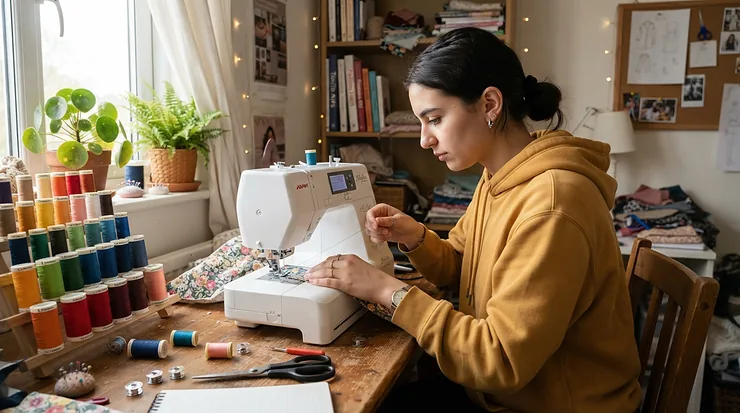
Squinting at a needle eye the size of a grain of rice, thread going soft and frayed between your fingers, the light in the room somehow never quite where you need it — if that scene sounds painfully familiar, you are exactly who the automatic threading sewing machine was built for. This one feature, a small lever or button that pulls the thread through the needle for you, quietly saves you from the single most-hated ten seconds of home sewing. It sounds trivial until you have done it forty times in an afternoon of mending school trousers.
Threading itself is old technology dressed up nicely: the needle-and-shuttle mechanism that makes a lockstitch has barely changed since the 19th century, as Wikipedia’s overview of the sewing machine’s development makes clear, even as the electronics wrapped around it have leapt forward. What’s changed is everything around that needle — LCD screens, one-step buttonholes, drop-in bobbins — and none of it matters if you dread sitting down at the machine in the first place.
This guide rounds up seven genuine, currently available machines sold through amazon.co.uk, spanning true budget picks through to machines with a bit more polish, all built around the same promise: point the thread, press the lever, sew. We’ll dig into real specifications, aggregate what actual buyers report in reviews, and be honest about where each one falls short — because a sewing machine that lies to you about its limitations is worse than one that’s merely basic.
Quick Comparison Table
Before the deep dive, here’s the shape of the market at a glance. Prices below are indicative ranges only — always check current pricing before buying, since retail prices shift with stock and promotions.
| Machine | Price Range | Stitches | Best For |
|---|---|---|---|
| Brother LS14S | under £120 | 14 | Total beginners, tightest budget |
| Singer 1408 Promise | around £100-140 | 8 | Small spaces, occasional mending |
| Janome J3-18 | £180-220 range | 18 | Learning without a manual overload |
| Brother XM2701 | £120-160 range | 27 | All-rounders wanting proven reliability |
| Brother CS5055 | £150-190 range | 60 | Buyers who want a screen and more stitch variety |
| Singer Heavy Duty 4452 | £220-260 range | 32 | Thick fabrics, denim, upholstery repairs |
| Brother Innov-IS A16 | £280-340 range | 16 | Best overall stitch quality and finish |
Look at that spread and a pattern jumps out immediately: stitch count and price rise together, but automatic threading itself doesn’t get meaningfully better as you spend more — a £100 machine and a £300 machine will thread the needle in roughly the same one or two seconds. What you’re actually paying for further up the table is stitch consistency, buttonhole precision, and a chassis that won’t rattle apart after two years of weekend use. Budget buyers shouldn’t feel short-changed on the threading convenience itself; that part of the experience is remarkably democratic across this whole list.
Just one click — help others make better buying decisions too!😊
Top 7 Automatic Threading Sewing Machines: Expert Analysis
1. Brother LS14S — best barebones budget pick for total beginners
The Brother LS14S strips things down to the essentials, and that’s precisely the point for someone who has never touched a sewing machine before. It carries 14 built-in stitches, a drop-in bobbin, and Brother’s simplified automatic needle threader that requires little more than lowering a lever after the thread is looped into place. The 4-step buttonhole is manual by modern standards but forgiving enough to practise on scrap fabric without wasting good material.
What most first-time buyers overlook is that fewer stitch options actually shortens the learning curve — there’s no 60-item menu to scroll through when you just need a straight stitch and a zigzag. Based on the spec comparison against pricier siblings, the LS14S sacrifices decorative flourishes and a wider table but keeps the drop-in bobbin and LED work light that genuinely matter for visibility.
Reviewers consistently report that the threader works reliably on standard all-purpose thread but can snag on thicker upholstery or metallic threads, which tracks with its beginner-focused design brief rather than being a flaw exactly — it just isn’t built for advanced fabrics. Aggregated feedback also flags the plastic bobbin cover as a common early failure point on units that get moved around a lot.
Pros:
- ✅ Genuinely simple learning curve for first-time sewers
- ✅ Lightweight enough to store in a cupboard between uses
- ✅ Reliable automatic threader on standard-weight thread
Cons:
- ❌ Struggles with metallic or heavyweight thread types
- ❌ Bobbin cover feels flimsy under frequent handling
In the under-£120 bracket, the Brother LS14S earns its keep as a genuine starter machine rather than a compromise — just don’t expect it to grow with you into quilting or heavy denim work.
2. Singer 1408 Promise — lightest machine for small spaces
At just over 6kg, the Singer 1408 Promise is built for people who sew on a kitchen table and pack the machine away afterwards. It offers 8 built-in stitches — modest by any standard — alongside Singer’s automatic needle threader and a vertical drop-in bobbin system that’s genuinely quick to load once you’ve done it twice.
What the spec sheet won’t tell you, but the practical experience makes obvious, is that fewer stitches means fewer dials to misjudge. This is a machine for hemming curtains, patching jeans, and running up simple cushion covers rather than garment construction with darts and facings. The white plastic shell keeps weight down but also keeps the price down, which is the trade Singer is clearly betting buyers will accept.
Aggregated review sentiment for this Singer line skews positive on ease of setup out of the box, with a recurring theme of buyers praising how little manual-reading was required before first use. A common complaint centres on stitch length control feeling imprecise compared with dial-based rivals, since adjustment is more limited than on machines further up this list.
Pros:
- ✅ Among the lightest machines in this whole round-up
- ✅ Minimal setup time straight out of the box
- ✅ Straightforward automatic threader for basic thread weights
Cons:
- ❌ Only 8 stitches limits garment-construction versatility
- ❌ Stitch length adjustment feels coarse compared with rivals
For anyone whose sewing lives in short, occasional bursts — mending rather than making — the Singer 1408 Promise is a sensible, unfussy pick sitting comfortably in the sub-£140 range.
3. Janome J3-18 — simplest two-dial learning curve
The Janome J3-18 takes a mechanical approach with exactly two dials: one for stitch selection, one for stitch length. That’s the whole interface. It carries 18 stitches, a built-in needle threader, and a 4-step automatic buttonhole, wrapped in a genuinely sturdy metal-framed chassis that feels a notch above its plastic-bodied competitors at a similar price.
Here’s what to weigh: Janome’s needle threader mechanism uses a slightly different hook action than Brother’s, and on paper this means marginally more finger dexterity is needed to align the thread correctly before pressing the lever — not difficult, just a different muscle memory if you’ve used a Brother machine before. The trade-off is a noticeably quieter, more solid-feeling motor when actually sewing, which matters if you’re working in a shared living space in the evenings.
Reviewers consistently note the free-arm function for sewing sleeves and trouser cuffs as a standout for a machine at this price point, something not every competitor includes. A recurring theme in aggregated feedback is praise for build quality that feels closer to a mid-range machine than an entry-level one, though a handful of buyers mention the accessory bag feels like an afterthought.
Pros:
- ✅ Sturdier metal frame than most machines in its price bracket
- ✅ Genuinely quiet motor for evening or shared-space sewing
- ✅ Useful free-arm function for cuffs and sleeves
Cons:
- ❌ Needle threader needs slightly more precise alignment than Brother’s
- ❌ Included accessories feel basic compared with the machine itself
Sitting in the £180-220 range, the Janome J3-18 is the pick for anyone who values a machine that feels built to last over one stacked with stitch options they’ll never use.
4. Brother XM2701 — best all-rounder with a proven track record
Few machines on Amazon carry as long a review history as the Brother XM2701, and that volume of real-world use is itself useful data. With 27 built-in stitches, 63 stitch functions, and a one-step auto-size buttonholer, it sits comfortably as the machine most people should default to if they can’t decide.
Based on the spec comparison with the cheaper LS14S, the extra stitch count buys genuine garment-construction flexibility — blind hems, stretch stitches for jersey, and decorative options for finishing edges — without pushing the price into computerised-machine territory. The automatic threader here is the same lever-and-hook mechanism found across Brother’s range, consistently rated among the easiest to operate one-handed.
What most buyers overlook about this model is that its accessory bundle — six presser feet including a zipper foot and buttonhole foot — genuinely offsets needing to buy separate attachments later, unlike some rivals that nickel-and-dime you on feet. Aggregated review sentiment across tens of thousands of ratings leans heavily positive on reliability over years of use, with the main recurring criticism being that the automatic thread cutter (a separate feature from the threader) can be fiddly to engage consistently.
Pros:
- ✅ Enormous, largely positive long-term review history
- ✅ Generous six-foot accessory bundle included
- ✅ Genuinely versatile stitch selection for garment work
Cons:
- ❌ Automatic thread cutter function is inconsistent in practice
- ❌ LCD-free interface feels dated next to computerised rivals
At £120-160, the Brother XM2701 earns its reputation as the internet’s most recommended entry-to-mid machine, and honestly, the hype here is largely deserved.
5. Brother CS5055 — best LCD display for stitch selection
Step up to the Brother CS5055 and you get a proper computerised interface: an LCD screen showing stitch length and width recommendations, 60 built-in stitches, and 7 styles of one-step buttonhole. The automatic needle threader is unchanged from Brother’s cheaper models, which is genuinely good news — it means you’re not paying extra for a “better” threader, you’re paying for everything wrapped around it.
On paper this means beginners get more guardrails: the screen tells you what settings suit your chosen stitch, removing the guesswork that trips up new sewers on purely mechanical machines. Here’s what to weigh against that convenience — computerised machines carry more circuitry that can, in principle, be costlier to repair out of warranty than a mechanical equivalent, something worth factoring into any long-term cost thinking.
Reviewers consistently highlight the wide table extension included in the box as unusually generous for this price bracket, useful for anyone tackling anything bigger than a shirt. A common complaint in user reviews concerns the foot pedal cable feeling short for taller users or awkward desk setups — a minor gripe, but one that comes up often enough to flag honestly.
Pros:
- ✅ LCD screen genuinely simplifies stitch and setting choices
- ✅ Wide table extension included as standard
- ✅ Same reliable threader mechanism as Brother’s cheaper models
Cons:
- ❌ Foot pedal cable length is a recurring minor annoyance
- ❌ More electronics could mean pricier out-of-warranty repairs
In the £150-190 range, the Brother CS5055 hits a genuine sweet spot for anyone who wants computerised convenience without stepping into premium pricing.
6. Singer Heavy Duty 4452 — toughest frame for thick fabrics
The Singer Heavy Duty 4452 trades stitch-count bragging rights for raw mechanical muscle: a stainless-steel bedplate, a stronger motor rated for higher sewing speeds, and 32 built-in stitches aimed squarely at denim, canvas, and multiple fabric layers. Its automatic needle threader is a lever-action design similar in principle to Singer’s cheaper machines, but built into a noticeably more rigid housing.
What the spec sheet won’t tell you, but user reports suggest, is that the extra motor torque here genuinely changes what you can sew without the machine bogging down — think repairing a heavy work jacket or hemming thick curtains, tasks that stall lighter machines mid-seam. Based on the spec comparison with the mechanical Janome above, the trade-off is weight: this machine is noticeably heavier to lift in and out of storage.
Aggregated customer sentiment is strongly positive on power and durability, with a recurring theme of buyers specifically praising its performance on denim double-seams that gave lighter machines trouble. The most common criticism in review data concerns noise — this is not a quiet machine, and anyone sewing near a sleeping household member at night should factor that in.
Pros:
- ✅ Genuinely handles thick fabrics and multiple denim layers
- ✅ Stainless-steel bedplate adds real durability
- ✅ Strong aggregated reviews specifically on power and reliability
Cons:
- ❌ Noticeably heavier than other machines on this list
- ❌ Runs louder than most competitors at this price point
For £220-260, the Singer Heavy Duty 4452 is the obvious pick for anyone whose sewing pile leans towards jeans, jackets, and upholstery rather than delicate blouses.
7. Brother Innov-IS A16 — best overall stitch quality
The Brother Innov-IS A16 sits at the top of this round-up, and the difference shows the moment you sew a test seam: 16 stitches and 3 one-step buttonhole styles, but every one of them comes out with a consistency that the cheaper machines on this list simply can’t quite match. Its automatic needle threading and auto-reinforcement at the start and end of seams take two separate frustrations — threading and manually backstitching — off your plate simultaneously.
Here’s what most buyers overlook about stepping up to this tier: it isn’t really about stitch count at all, since 16 is actually fewer than several cheaper machines here. On paper this means you’re paying for build tolerances and motor consistency rather than a longer stitch menu — the kind of quality difference that becomes obvious on stretch fabrics and denim where cheaper machines occasionally skip stitches.
Reviewers consistently describe this model as light enough to carry to sewing classes while still delivering noticeably smoother stitching on tricky fabrics like sheers and jersey. The main theme in aggregated feedback that reads as a genuine drawback, rather than a beginner complaint, is that the stitch library feels sparse for buyers who specifically want heavy decorative or embroidery-style options.
Pros:
- ✅ Noticeably more consistent stitch quality across fabric types
- ✅ Auto-reinforcement removes manual backstitching at seam ends
- ✅ Light enough to transport to classes or workshops comfortably
Cons:
- ❌ Fewer built-in stitches than several cheaper machines here
- ❌ Higher price point than anything else on this list
At £280-340, the Brother Innov-IS A16 is for buyers who’ve decided sewing is a genuine hobby rather than an occasional chore, and want a machine that rewards the investment with cleaner results.
Practical Usage Guide: Getting the Most From Beginner-Friendly Threading
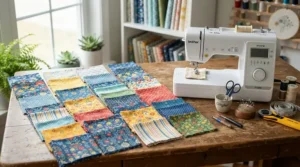
Getting a new machine threaded correctly the first time sets the tone for everything after, so it’s worth doing properly rather than rushing. Start by raising the presser foot and the needle to their highest position before you touch the threader lever — on every machine in this list, skipping that step is the single most common reason the automatic threader jams or fails to catch the thread.
Wind and insert the bobbin before engaging the needle threader, not after; threading the top first and then fumbling with the bobbin case often knocks the top thread out of its tension discs. Once threaded, always run a test line on a folded scrap of the actual fabric you’re about to use, checking both the top and underside of the stitch for looping or puckering.
In the first 30 days, the most common new-owner mistake is forcing thicker thread — quilting or upholstery weight — through a threader designed for standard all-purpose thread. If it doesn’t catch smoothly within two attempts, thread that needle by hand rather than repeatedly stressing the small hook mechanism, which is usually the first part to wear out or bend on any of these machines. A light drop of sewing-machine oil on the bobbin race every few months, per your manual’s schedule, keeps the whole mechanism running smoothly for years rather than months.
Real-World Scenarios: Matching the Machine to Your Life
The uni student mending on a budget: sharing a flat, sewing maybe once a fortnight, mostly hemming trousers and fixing loose buttons. The Brother LS14S or Singer 1408 Promise cover this comfortably — light enough to store under a bed, cheap enough that a term of neglect doesn’t feel like wasted money, and simple enough that no manual-reading marathon is required before that first repair.
The parent handling costume season and school uniforms: frequent but varied sewing — elastic waistbands one week, a World Book Day costume the next, patching knees the week after that. The Brother XM2701 earns its keep here with the widest practical stitch range for the price, plus enough accessory feet to cover buttonholes and zips without extra purchases.
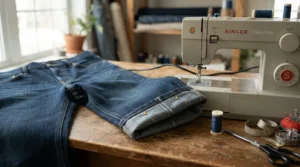
The weekend hobbyist tackling denim and heavier projects: repairing work jackets, making tote bags from canvas, occasionally sewing through four layers of fabric at a seam intersection. The Singer Heavy Duty 4452 is built precisely for this — the extra motor power and steel bedplate are wasted on lightweight cotton but genuinely earn their keep on anything thicker.
Problem → Solution: Fixing Common Threading and Tension Issues
Thread keeps slipping out of the needle after the automatic threader engages: check that the presser foot is fully raised before threading, since a lowered foot changes tension disc pressure and can pull thread back out as the hook retracts. This is the single most reported issue across aggregated reviews for every machine on this list and is almost always a sequencing error rather than a faulty threader.
Needle threader hook won’t catch the thread at all: the needle usually isn’t at its highest position, or the thread hasn’t been drawn far enough left through the last guide before lowering the lever. On the Janome J3-18 specifically, user reports suggest a slightly firmer, more deliberate lever push is needed compared with Brother’s lighter action.
Stitches skip or loop on the underside after rethreading: this is a tension problem, not a threading problem, and it’s worth ruling out before assuming the machine is faulty. Rethread completely from the spool, ensuring the thread seats properly in the tension discs, and test on scrap fabric matching your project’s weight — a common mistake is testing on thin cotton when the actual project uses denim or fleece, which needs different tension entirely.
Buttonhole comes out uneven or lopsided: on one-step buttonhole machines like the Brother XM2701 and Brother Innov-IS A16, this is almost always caused by the fabric shifting under the buttonhole foot rather than a machine fault — pin the fabric in place first and let the foot’s built-in sensor do its job without manual tugging.
What Is an Automatic Threading Sewing Machine?
An automatic threading sewing machine is a machine fitted with a built-in mechanism — usually a small lever-operated hook — that pulls the top thread through the eye of the needle for you, removing the need to squint and guide thread through manually. It’s a convenience feature layered onto standard mechanical or computerised sewing machines, not a separate category of machine, and it’s now common even on budget models under £120.
How to Choose an Automatic Threading Sewing Machine
- Check the threader mechanism, not just its existence — lever-hook designs (Brother, Singer) differ slightly from Janome’s, and if you’ve used one brand before, switching can mean a short relearning curve.
- Match stitch count to actual need, not aspiration — most home sewing uses four or five stitches regularly; extra options add cost without adding usefulness for casual buyers.
- Weigh the machine before buying if portability matters — anything under 6.5kg travels easily to classes; heavy-duty machines over 8kg are better left permanently set up.
- Look for a metal internal frame, even on cheap machines — plastic-bodied machines can still be reliable, but metal frames hold stitch alignment better over years of use.
- Consider fabric weight honestly — buyers who mainly hem curtains and mend clothing need less motor power than those working denim, canvas, or multiple layers.
- Read aggregated review themes, not star ratings alone — a 4.6-star machine with recurring bobbin-cover complaints tells you more than the number itself.
- Factor in UK plug and voltage compatibility — machines genuinely built for the UK market, or sold with a compliant UK plug, avoid the hassle and safety risk of adapted imports; see Electrical Safety First’s guidance on appliance safety for what to check before plugging in any new appliance.
Cheap Automatic Threading Sewing Machine: What You Actually Get for the Money
Buyers hunting for a cheap automatic threading sewing machine are often bracing for a nasty compromise, and the honest answer is: not really, not on the threading itself. The mechanism that pulls thread through the needle costs manufacturers very little to include, which is exactly why it now appears on machines like the Brother LS14S and Singer 1408 Promise priced well under £150.
What you do sacrifice at the cheap end is stitch variety, motor torque for heavy fabric, and the small quality-of-life extras — wider tables, LCD screens, more presser feet — found on the Brother CS5055 and above. Total cost of ownership matters more than sticker price here: a £100 machine that needs replacing in eighteen months because of a snapped bobbin case is a worse long-term value than a £160 machine that lasts a decade, even though the upfront number looks scarier.
Automatic Threading Sewing Machine for Beginners: What Actually Matters
For someone who has never sewn before, an automatic threading sewing machine for beginners should prioritise three things above stitch count: a simple, forgiving threader mechanism, a drop-in bobbin rather than a front-loading one, and a limited enough interface that nothing feels intimidating on day one. The Brother LS14S, Singer 1408 Promise, and Janome J3-18 all hit this brief cleanly, each trading stitch variety for genuine ease of learning.
What most buying guides overlook is that beginners rarely fail because a machine is too basic — they fail because a machine is too complicated and gets abandoned in a cupboard after one frustrating afternoon. A simpler machine that actually gets used every week teaches far more than an advanced one gathering dust.
Affordable Convenience Features Worth Paying For (And Ones You Can Skip)
Not every affordable convenience feature earns its keep, and it’s worth separating genuinely useful additions from marketing padding before you pay extra for either. A drop-in bobbin, an LED work light, and a one-step buttonhole are all worth prioritising even on a tight budget — they solve real, recurring frustrations rather than adding novelty.
An LCD screen, seen on the Brother CS5055, is a genuine convenience for beginners still learning stitch-and-tension pairings, though experienced sewers often find they stop glancing at it within weeks. Decorative stitch libraries beyond about twenty patterns, meanwhile, are the feature most likely to sit unused — reviewers across nearly every machine on this list mention using perhaps five stitches regularly regardless of how many the box advertises.
Common Mistakes When Buying a Budget Sewing Machine
The most frequent mistake buyers make with a budget sewing machine is judging it purely on stitch count, when build quality and bobbin system design matter far more for day-to-day satisfaction. A close second is skipping the accessory list entirely — a machine that looks cheaper on the surface can actually cost more once you’ve bought the zipper foot and buttonhole foot separately, unlike the Brother XM2701‘s generous included bundle.
Buyers also frequently underestimate fabric weight needs, picking a lightweight machine like the Singer 1408 Promise and then being disappointed when it struggles with denim it was never designed to handle. Reading a handful of genuinely negative reviews before buying, rather than only the five-star highlights, consistently reveals these mismatches before they become an expensive lesson.
Automatic Threading vs Manual Threading: The Real Difference
| Factor | Automatic Threading | Manual Threading |
|---|---|---|
| Time per rethread | 2-5 seconds | 30 seconds to several minutes |
| Eye strain | Minimal | Significant, especially in low light |
| Best for | Frequent thread changes, beginners, low vision | Very fine or unusual threads the hook can’t grip |
| Best For | Almost all home sewers | Specialist or vintage-machine sewers |
The gap here isn’t subtle: automatic threading turns a genuinely dreaded task into a non-event, which is why every machine in this guide includes it standard even at the cheapest end. Manual threading still has a narrow place for extremely fine metallic or novelty threads that automatic hooks can struggle to grip cleanly, but for the vast majority of everyday sewing, the case for automatic threading is essentially settled.
Long-Term Cost & Maintenance
A sewing machine’s real cost isn’t the purchase price, it’s the sum of servicing, replacement parts, and the years of use you actually get out of it. Mechanical machines like the Janome J3-18 and Singer Heavy Duty 4452 tend to have lower long-term repair costs simply because there’s less electronics to fail, while computerised machines like the Brother CS5055 trade that slight risk for a more forgiving learning experience up front.
Basic maintenance — a drop of sewing-machine oil every few months, regular lint removal from the bobbin race, and an occasional needle replacement — costs a few pounds a year and dramatically extends any machine’s working life. When a machine genuinely reaches the end of its life rather than needing simple maintenance, recycling it properly through recycleyourelectricals.org.uk keeps it out of landfill and recovers the metal components responsibly, rather than it sitting unused in a cupboard for a decade first.
Safety, Standards and What UK Buyers Should Check
Every machine in this guide is sold with a UK-compliant plug and should carry the UKCA or CE marking confirming it meets electrical safety standards for the British market — always check this on the listing before buying, particularly with imported or grey-market listings that occasionally slip through third-party sellers. According to independent buying guides such as Which?’s tested roundup of sewing machines, ease of use and stitch consistency vary far more between machines than most marketing copy admits, which is exactly why hands-on and aggregated review data matters more than spec sheets alone.
Basic electrical housekeeping applies here as with any appliance: check the cable and plug periodically for fraying, avoid leaving the machine running unattended, and don’t overload a single socket if it’s plugged in alongside other high-draw devices. None of the seven machines here pose unusual electrical risk beyond any standard small household appliance, but a five-minute visual check before first use costs nothing and catches the rare faulty unit before it becomes a problem.
FAQ
❓ What is the easiest automatic threading sewing machine to use for a complete beginner?
❓ Do cheap automatic threading sewing machines actually work properly?
❓ How long does an automatic needle threader typically last before breaking?
❓ Can an automatic threading sewing machine handle thick fabric like denim?
❓ Is it worth paying more for a computerised automatic threading sewing machine?
Conclusion
Across all seven machines here, one thing holds steady regardless of price: automatic threading has stopped being a premium feature and become a baseline expectation, even on the cheapest options like the Brother LS14S and Singer 1408 Promise. What actually separates a £100 machine from a £300 one is everything built around that threader — motor strength, stitch consistency, and how the whole thing feels after the fiftieth use rather than the first.
If your sewing is occasional mending and hemming, the budget end of this list will serve you honestly and well. If you’re sewing weekly, tackling denim, or simply want a machine that rewards more ambitious projects with cleaner results, stepping up to the Brother XM2701, Brother CS5055, or Brother Innov-IS A16 pays for itself in fewer frustrations per project. Whichever you pick, the days of dreading the threading step are genuinely, quietly over.
Recommended for You
- Sewing Machine With Automatic Threading: 7 Best UK Picks (2026)
- Push-Button Sewing Machine for Beginners: 7 Best Easy Picks (2026)
- Push-Button Sewing Machine: 7 Best UK Picks for Easy Stitching (2026)
Disclaimer: This article contains affiliate links. As an Amazon Associate, I earn from qualifying purchases. If you purchase products through these links, we may earn a small commission at no additional cost to you.
✨ Found this helpful? Share it with your friends! 💬🤗
