
In This Article
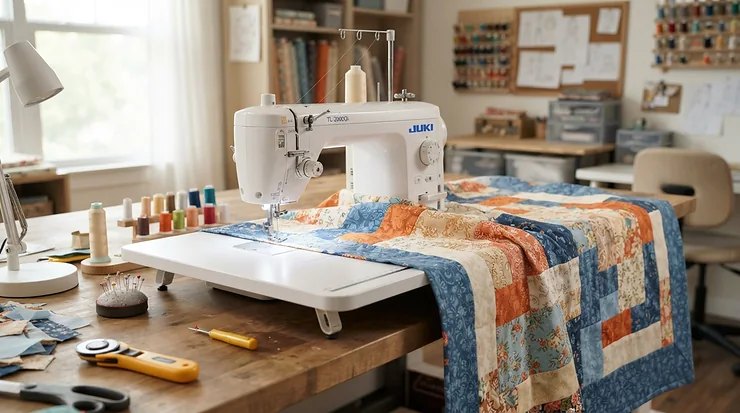
An all-in-one sewing machine is a single computerised machine that sews, quilts and embroiders. It combines utility and decorative stitching, quilting-friendly feet and a detachable embroidery unit that moves a hooped design under the needle for you. One footprint on your table covers dressmaking, patchwork and personalised finishing.
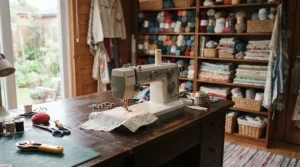
Picture your craft room as a tiny flat. Every extra machine is another flatmate, with its own cables, its own snoring and its own claim on the good shelf. An all-in-one sewing machine is the clever landlord’s answer: three crafts, one tenant.
The idea is not new. Machine embroidery has been computer-controlled for decades. What has changed is how much of it now fits on a kitchen table, with touchscreens, Wi-Fi and design libraries that would have looked like science fiction on a 1990s shop floor.
Be clear-eyed about the trade-off, though. A machine that does everything rarely does every single thing best. This guide separates the genuine strengths from the marketing gloss, using real specifications, published roundups and straight reasoning. I couldn’t verify a large pool of UK owner reviews for every model at the time of research. I say so wherever it matters, and I never invent customer feedback.
You’ll find seven real machines across budget, mid-range and premium tiers, plus practical guides, a buying framework and the UK safety context. If you’ve ever wondered whether one machine can be a versatile hobby machine rather than a jack of all trades, read on.
Quick Comparison: 7 All-in-One Sewing Machines at a Glance
| Machine | Embroidery area | Built-in sewing stitches | Best For |
|---|---|---|---|
| Brother SE700 | 100 × 100 mm | 103 | First-timers and tight budgets |
| Singer SE9180 | 170 × 100 mm (supplied hoop) | 250+ | Big-screen, feature-rich value |
| Brother SE2000 | 130 × 180 mm | 241 | Growing hobbyists |
| Brother Innov-is NQ3700D | 160 × 260 mm | 291 | Large designs and roomy sewing |
| bernette b79 | 160 × 260 mm | 300 | Large-hoop ambition without top-tier cost |
| Janome Skyline S9 | 170 × 200 mm | 300 | Sewing-first crafters who also embroider |
| Janome Memory Craft 9850 | 170 × 200 mm | Check current listing | Embroidery-led premium buyers |
Read the table as a ladder. The Brother SE700 is the lowest rung and fine for small motifs. The jump to the Brother SE2000 buys a noticeably bigger canvas. The two 160 × 260 mm machines, the Brother Innov-is NQ3700D and the bernette b79, are where towels, bag panels and larger quilt-block designs become realistic. The two Janome machines trade hoop size for a stronger sewing engine and a premium build.
💬 Just one click — help others make better buying decisions too!😊
Top 7 All-in-One Sewing Machines: Expert Analysis
A quick note on method. Specifications come from manufacturer and retailer listings plus published roundups. Prices below are indicative bands that may vary by seller and model code, so check current price on amazon.co.uk before you commit. Some of these machines are sold under different model codes in different regions, so match the exact code and a UK plug before buying.
1. Brother SE700 — gentlest on-ramp to embroidery
The SE700 is the machine for finding out whether embroidery is your thing without remortgaging your sewing room. Retailers list it as the replacement for the SE600.
It has 103 built-in stitches, including 10 one-step auto-size buttonholes. That covers seams, hems, zips and a few decorative flourishes. The 4 × 4 inch (about 100 × 100 mm) embroidery field suits monograms, small motifs and appliqué, but not a full cushion panel. Sewing tops out at 710 stitches per minute, a calm pace that suits learners. Wireless connectivity and the Artspira app add design transfer, and the colour touchscreen previews designs before you stitch.
Based on the spec comparison, this is a sensible first all-in-one sewing machine for light dressmaking and personalised gifts. The compromise is the small hoop, which you will feel within months if you love bigger designs.
Published roundups I reviewed treat it, and the SE600 before it, as the budget-friendly beginner pick. They flag the small field as the main compromise. I couldn’t verify a large UK review sample.
Pros:
- ✅ Approachable price for a true combination machine
- ✅ Wireless transfer plus a large design library
- ✅ Light, simple and beginner-friendly
Cons:
- ❌ 100 × 100 mm hoop limits design size
- ❌ Modest stitch count versus pricier rivals
Indicative range: roughly £400–£600. Strong value if small designs satisfy you.
2. Singer SE9180 — biggest touchscreen in the value bracket
Singer’s SE9180 puts a 7-inch colour touchscreen on a machine that weighs only about 7 kg (15.5 lb), which is unusual at this level. That screen makes stitch selection and design editing far less fiddly than on the small displays of cheaper combos.
You get 250+ built-in stitches, 150 embroidery designs, 10 fonts and an automatic needle threader. Speeds are up to 800 stitches per minute sewing and 450 embroidering. Embroidering at 450 is the gentler pace that protects thread and design quality. The sewing space, needle to tower, is 6.5 inches, so bulky quilts will feel tight.
My read is that this suits someone who wants a roomy, colourful interface and plenty of decorative stitches without paying Janome prices. Check the hoop details, because listings quote a 170 × 100 mm supplied hoop but some pages mention a larger maximum area. Singer’s own listing also notes that some mySewnet cloud features need a subscription.
I couldn’t find enough independent owner reviews to summarise honestly, so judge it on specifications and warranty.
Pros:
- ✅ Large 7-inch touchscreen is easy to read
- ✅ Light enough to carry to classes
- ✅ Huge stitch and design selection
Cons:
- ❌ Tight 6.5-inch sewing space for big quilts
- ❌ Supplied hoop is modest in size
Indicative range: roughly £600–£900. Good value for feature-hungry beginners.
3. Brother SE2000 — the 130 × 180 mm sweet spot
The SE2000 is the machine you buy to avoid buying twice. Its 5 × 7 inch (about 130 × 180 mm) hoop is the point where embroidery stops feeling like a novelty and starts feeling like a craft.
On the sewing side you get 241 built-in stitches, 10 auto-size buttonholes, My Custom Stitch for designing your own stitches, and jump-stitch trimming. That trimming means fewer snips when moving between colours. Sewing hits 850 stitches per minute and embroidery 650, both brisk. Wi-Fi and Artspira compatibility add design transfer, and a 4 × 7 inch magnetic hoop is optional. The 3.7-inch screen is adequate rather than lavish.
Honestly assessed, this is the best-balanced Brother combo for hobbyists planning to embroider regularly. One reviewer who bought it noted the 5 × 7 inch limit is small next to many rivals. Another owner-reviewer described it as quieter than cheap machines but not as hushed as thousand-pound-plus models, and recommended a foam mat and a magnetic hoop.
Pros:
- ✅ Roomy 5 × 7 inch embroidery field
- ✅ 241 stitches plus My Custom Stitch
- ✅ Fast 850 spm sewing speed
Cons:
- ❌ Magnetic hoop is an extra cost
- ❌ Not whisper-quiet at full speed
Indicative range: roughly £900–£1,300. Very good value for committed hobbyists.
4. Brother Innov-is NQ3700D — big canvas and roomy arm
The NQ3700D has a 6 × 10 inch (about 160 × 260 mm) embroidery field and an 8.3 inch needle-to-arm space. Few all-in-one sewing machines combine both, and the pairing matters for bulky projects.
Sewing offers 291 stitches and 10 one-step buttonholes, plus an automatic height adjuster (AHA) that senses fabric thickness so seams stay even over bulky joins. The pivot function and knee lift keep your hands on the fabric during turns. Embroidery brings 313 built-in designs, 55 of them licensed Disney, with 13 fonts and wireless transfer. Both 6 × 10 and 5 × 7 inch hoops are supplied, and the 4.85-inch touchscreen is generous.
I’d rank it as the strongest pick here for crafters who want big designs and quilt-friendly arm space together. Watch availability: its predecessor, the NQ3600D, has been discontinued in the US, so confirm UK stock and the exact model code.
I couldn’t verify independent owner reviews, so treat this as a specification-led recommendation.
Pros:
- ✅ Large 160 × 260 mm embroidery area
- ✅ 8.3-inch arm space for bulky projects
- ✅ Two hoops supplied
Cons:
- ❌ Heavier at roughly 13.6 kg with embroidery unit
- ❌ Premium pricing and variable UK availability
Indicative range: roughly £1,500–£2,200. Excellent for ambitious makers if you can confirm stock.
5. bernette b79 — large hoop, independent brain
The b79 brings a 160 × 260 mm hoop and a large touchscreen to a brand positioned below the premium Swiss names. One comparison also praises its independence: it needs no phone or computer to run.
You get 300 built-in stitches including 11 one-step buttonholes, plus a USB port for importing designs. That port means you can take designs from your own files without relying on an app. A comparison lists 208 built-in embroidery designs, 800 spm embroidery and 1,000 spm sewing, with sewing speed the headline gap against Brother’s 850. The speed matters mainly on long straight seams.
What most buyers overlook is the supplier’s warranty. A US listing cites five years mechanical, but UK terms may differ, so verify before purchase. An owner of more than a year used it as a benchmark in a US roundup but picked a pricier Bernina as overall winner. A UK retailer calls it a good first embroidery-capable machine.
Pros:
- ✅ 160 × 260 mm hoop at friendlier pricing
- ✅ 300 stitches and USB design import
- ✅ Works standalone without apps
Cons:
- ❌ Fewer built-in designs than some rivals
- ❌ Warranty terms need UK verification
Indicative range: roughly £1,300–£1,900. Strong value for large-hoop buyers.
6. Janome Skyline S9 — sewing-first with 1,000 spm speed
If you sew far more than you embroider, the Skyline S9 is the thoughtful choice. Janome describes it as the first Skyline to include embroidery.
It offers 300 built-in stitches, 250 embroidery designs and a 170 × 200 mm (6.7 × 7.9 inch) embroidery area. Sewing reaches 1,000 stitches per minute and embroidery 800, so the sewing engine is built for real garment and quilt work. The 8.25-inch workspace to the right of the needle gives you proper room for rolled quilts. Free-motion quilting feet and a quilting guide bar are supplied, and Wi-Fi with Janome’s iPad apps handles design transfer. At about 12 kg (26 lb) it’s a machine you keep on the table, not one you carry to classes.
The analysis is simple. Pick this one when sewing quality and quilting comfort outrank sheer design count.
I couldn’t verify independent review data, so judge it on the specification and your local dealer’s demonstration.
Pros:
- ✅ Roomy 8.25-inch workspace for quilting
- ✅ Fast, quilt-ready 1,000 spm sewing
- ✅ Quilting feet included in the box
Cons:
- ❌ Premium price ceiling
- ❌ Heavy to move around
Indicative range: roughly £2,500–£3,200. Worth it for dedicated sewists and quilters.
7. Janome Memory Craft 9850 — premium, stability-first embroidery
The MC9850 is for crafters who judge an embroidery unit the way drivers judge a chassis. Its retailer description calls it the most stable embroidery unit Janome has produced, which is a manufacturer claim worth testing in person.
It matches the Skyline S9 on 170 × 200 mm embroidery area and offers up to 1,000 stitches per minute for sewing and 800 for embroidery. Mirror-image stitching is included, and a single design can hold up to 200,000 stitches. That headroom matters for dense, large motifs. One hoop is supplied, with others optional, so factor in extra hoops. Confirm the sewing stitch count and workspace on the current listing, since sources I found were inconsistent.
My honest read is that this is the pick for embroidery-led crafters who want a Janome-quality sewing engine behind it, and who understand they’re paying for refinement rather than extra features.
I found no verified independent review sample, so a dealer demonstration is especially worthwhile here.
Pros:
- ✅ Stable embroidery unit for dense designs
- ✅ Fast 1,000 spm sewing speed
- ✅ Very high stitches-per-design limit
Cons:
- ❌ Only one hoop included
- ❌ Highest-tier pricing
Indicative range: roughly £2,500–£3,500. Best only if embroidery quality is your priority.
Spec Face-Off: Speed, Screen and Connectivity
| Machine | Max sewing speed | Screen | Design transfer | Best For |
|---|---|---|---|---|
| Brother SE700 | 710 spm | Colour touchscreen | Wireless + USB | Beginners |
| Singer SE9180 | 800 spm | 7-inch touchscreen | Wi-Fi/mySewnet + USB | Value and visibility |
| Brother SE2000 | 850 spm | 3.7-inch colour LCD | Wi-Fi + Artspira | Growing hobbyists |
| Brother Innov-is NQ3700D | 850 spm | 4.85-inch touchscreen | Wireless | Big projects |
| bernette b79 | 1,000 spm | Large touchscreen | USB | Standalone use |
| Janome Skyline S9 | 1,000 spm | Colour touchscreen | Wi-Fi + Janome apps | Sewing-first users |
| Janome Memory Craft 9850 | 1,000 spm | See current listing | See current listing | Embroidery specialists |
Speed only matters if your projects are long seams, because embroidery pace is governed by the design, not the sewing figure. The Singer SE9180‘s 7-inch screen is a real usability gain, while the Janome machines give up screen glamour for sewing speed. For first-timers, the Brother SE700 and Brother SE2000 have the simplest transfer routes.
Your First 30 Days with an All-in-One Sewing Machine: Setup, Care and Mistakes
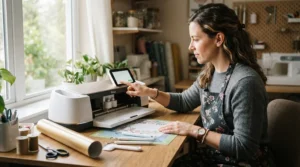
Treat the first month as an apprenticeship. Expect your best work in week four, not day one.
Week one: sew before you embroider. Unpack on a sturdy table. A foam mat underneath tames vibration and noise, a tip echoed by owner-reviewers. Thread carefully, wind a bobbin and test stitches on scrap cotton, adjusting tension in small steps. Learn the screen before you learn the hoop.
Week two: go slow on embroidery. Use embroidery needles, not universal ones. Pair every design with stabiliser, usually tear-away for woven fabric and cut-away for stretch. Fit the fabric snugly without stretching it, and use the 60-weight bobbin thread most manuals recommend. Stitch a small motif first.
Week three: build habits. Clean lint from the bobbin area at every bobbin change. Replace the needle after every project or any snag, since a dull needle is the usual suspect behind skipped stitches and shredded thread. Check your manual for oiling, because many computerised machines need none.
Week four: stretch. Try a quilt block or a lined bag. Update firmware if wireless updates are offered.
Mistakes to avoid: skipping stabiliser, hooping loosely, fitting the wrong needle, ignoring the thread path, and forcing thick fabric through the feed. Slowing the speed slider solves more problems than any accessory.
Real-World Scenarios: Matching a Machine to Your Life
Specifications mean little until you place them in a real life.
The student in a shared flat. Budget is tight, the table doubles as a desk, and projects are weekly and small: patches, repairs, a monogrammed tote. The Brother SE700 fits, because its 100 × 100 mm hoop covers that work. The Singer SE9180 is a stretch option if you want a bigger screen and lighter carry.
The quilting-curious retiree. Evenings are for lap quilts with embroidered labels, and the machine stays on a permanent table. Throat space matters more than hoop size. The Janome Skyline S9, with its 8.25-inch workspace and quilting feet, or the Brother Innov-is NQ3700D suits this life. Both handle bulky rolls more comfortably than compact models.
The gift maker. Four to six hours a week go on towels, tote bags and personalised cushions. A larger field earns its keep here, so the Brother SE2000 or bernette b79 makes sense. An honest caveat: if you plan to sell hundreds of items, an all-in-one sewing machine is a hobby tool. A multi-needle embroidery machine would cope better with volume.
How to Choose an All-in-One Sewing Machine
Use this six-step checklist and you’ll avoid most regrets.
- Work out your split. If you sew nine-tenths of the time, prioritise sewing speed and workspace. If you embroider constantly, prioritise hoop size and unit stability.
- Match the hoop to your projects. 100 × 100 mm suits motifs. 130 × 180 mm suits most gifts. 160 × 260 mm suits towels and bag panels.
- Check needle-to-arm space. Under 7 inches will frustrate quilters. Over 8 inches is comfortable.
- Judge the sewing half first. It’s what you’ll use most. Look for an automatic needle threader, decent feet and speed control.
- Confirm file formats and transfer. USB is simple and Wi-Fi is convenient. Check which file types your machine reads before buying designs.
- Verify UK service and warranty. Choose a model sold with a UK plug, an authorised UK dealer and clear warranty terms.
Independent reading helps. Which?’s sewing machine advice lists guides comparing brands such as Singer, Janome and Brother. It’s a useful cross-check on brand reliability and service expectations. Add budget for consumables too, because needles, stabilisers and thread are recurring costs.
All-in-One Sewing Embroidery Quilting Machine: What Each Craft Really Demands
An all-in-one sewing embroidery quilting machine is really three machines negotiating for one chassis. Knowing what each craft wants helps you spot where compromises hide.
Sewing wants a strong feed system, consistent tension and plenty of presser-foot options. Quilting wants room, usually 8 inches or more to the right of the needle, a walking foot or even-feed system, free-motion feet, a drop-feed lever and a speed slider. Embroidery wants a rock-steady arm, accurate hoop positioning, tidy thread handling and software that previews and edits designs.
The conflict is physical. An embroidery arm that slides on must be light enough to attach yet rigid enough not to wobble. Quilting wants long open space, while embroidery units need structural support. That’s why premium machines cost more: the engineering to reconcile those demands is expensive.
In practice, most all-in-one sewing embroidery quilting machines quilt well in the hoop and handle lap-sized and smaller quilts comfortably. Bed-sized quilts are easier on a quilting-focused machine with a larger throat. Be realistic and you’ll be delighted.
All-in-One Sewing Machine vs Single-Function Machine
The all-in-one sewing machine vs single-function machine debate comes down to space, money and ambition. Here’s the comparison, with the sewing machine basics in mind.
| Factor | All-in-one | Separate sewing + embroidery machines | Best For |
|---|---|---|---|
| Space | One footprint | Two machines, two power points | Small craft rooms |
| Cost | Usually lower than two machines | Higher combined spend | Budget-conscious crafters |
| Workflow | Swap the arm in minutes | Run jobs in parallel | Hobby use |
| Embroidery ceiling | Limited by sewing-body design | Higher, with multi-needle options | Volume production |
| Single-point failure | One fault stops both crafts | One machine can keep working | Business users |
| Example | Brother SE2000, Janome Skyline S9 | Embroidery-only Brother Innov-is NV880E, around £1,500, plus a separate sewing machine | Serious specialists |
The table shows why hobbyists favour one machine. Two machines of comparable quality cost far more and eat more space. Single-function wins once you’re stitching for volume, because a single-needle combo makes you re-thread for every colour change either way, while dedicated embroidery machines are built for longer runs. For most home crafters, an all-in-one sewing machine is the rational choice.
All-in-One Throat Space: Why Needle-to-Arm Room Matters
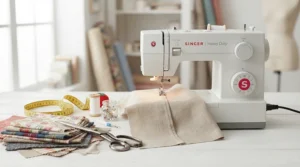
All-in-one throat space is the most overlooked number on a spec sheet. It means the gap between the needle and the machine’s upright body, and it decides whether your fabric flows or fights.
Listings put the Singer SE9180 at 6.5 inches, the Janome Skyline S9 at 8.25 inches and the Brother Innov-is NQ3700D at 8.3 inches. That two-inch difference matters more than it sounds. A rolled quilt is bulky, and with only 6.5 inches the roll jams against the machine and drags your stitch line.
Don’t confuse sewing throat space with embroidery area. A 160 × 260 mm hoop gives you design size, not arm clearance. Attaching the embroidery unit also covers the free arm on most machines, so cuffs and sleeves need the unit removed.
Rule of thumb: dress-makers can live with around 6.5 inches. Quilters should seek 8 inches or more. A wide extension table, pivot function and knee lift all help in tight spaces.
Multi-Craft Capability: Features That Actually Matter (And Those That Don’t)
Marketing loves big numbers, but multi-craft capability depends on a handful of unglamorous features.
Features that matter: an automatic needle threader saves your eyes. Automatic thread cutting or jump-stitch trimming saves snipping. A drop-feed lever allows free-motion quilting and button sewing. On-screen design preview prevents embroidering the wrong colour sequence. A decent speed slider rescues you when fabric turns tricky, and a supplied knee lift keeps hands free for steering.
Features that matter less: headline stitch counts. 300 stitches sound dazzling, but most sewists use a dozen. Hundreds of built-in designs also impress less than you’d think, because you’ll download or buy designs you actually like. Licensed character packs, like the Brother Innov-is NQ3700D‘s Disney designs, are lovely if you want them and filler if you don’t.
Connectivity is a judgement call. USB is dull but dependable, while Wi-Fi is convenient until a subscription appears, as with some Singer SE9180 cloud features. Choose based on your habits.
Good multi-craft capability, in short, means practical convenience in every craft, not a superlative in one.
A Versatile Hobby Machine for Every Skill Level
A truly versatile hobby machine grows with you. Here is who benefits most.
Beginners. Start small. The Brother SE700 teaches both skills without overwhelming you, and its price softens the blow if you drift away. If budget allows, the Brother SE2000 gives you a bigger runway.
Dressmakers. Prioritise sewing quality. Speed, tension and feed matter more than hoop size. The Janome Skyline S9 and bernette b79 offer the fastest sewing figures here.
Quilters. Look for arm space and free-motion capability. The Brother Innov-is NQ3700D and Janome Skyline S9 lead on throat room.
Gift makers. A mid-sized hoop is the sweet spot, so the Brother SE2000 or bernette b79 fit nicely.
Older crafters. A bright, large screen and light weight help, which favours the Singer SE9180 in particular.
Beyond skill, think about storage. A machine that lives permanently on its table suits the heavier models. If you pack away after every session, weight becomes a real daily factor, and the lighter machines pay you back each time you lift them.
Long-Term Cost & Maintenance
The purchase price is only the opening bid. Total cost of ownership includes consumables, servicing and software.
| Budget tier | Indicative machine cost | Example machines | What you get | Best For |
|---|---|---|---|---|
| Entry | £400–£900 | Brother SE700, Singer SE9180 | Small-to-medium hoop, core features | Testing the hobby |
| Mid-range | £900–£2,200 | Brother SE2000, Brother Innov-is NQ3700D, bernette b79 | Larger hoops, better editing | Regular makers |
| Premium | £2,500+ | Janome Skyline S9, Janome Memory Craft 9850 | Faster sewing, refined build | Long-term serious use |
Ongoing costs are modest but real. Budget for needles, stabilisers, embroidery thread and bobbin thread. Plan a service every one to two years, depending on use and warranty terms. Optional extras such as magnetic hoops and digitising software add up.
Cost-per-use makes the sums friendlier. As an illustration, a £900 machine used three hours a week for five years works out around £1.15 per hour. A cheaper machine you outgrow in a year is the expensive choice. Buying for the project size you’ll actually do next year is usually the thriftiest move.
Safety, Regulations and Compliance Guide
Sewing machines are mains-powered, so UK safety rules apply. In Great Britain, domestic electrical equipment falls under the Electrical Equipment (Safety) Regulations 2016, which set the requirements products must meet before they’re placed on the market. Manufacturers can use either UKCA or CE marking for most products in this category, so look for one of those marks on the machine or packaging.
Practical points:
- Buy a machine sold for the UK market, with a UK plug and mains voltage. Don’t rely on adapters for machines built for other voltages.
- Choose authorised UK retailers with clear returns and warranty terms.
- Keep fingers clear of the needle, and unplug before changing needles or cleaning.
- Supervise children and store scissors, needles and rotary tools safely.
- Replace damaged cables and foot controllers rather than repairing them yourself.
This is practical guidance rather than legal advice. If you’re importing a machine from abroad, check the compliance details first.
FAQ
❓ How much does an all-in-one sewing machine cost in the UK?
❓ Can an all-in-one sewing machine handle denim and thick fabric?
❓ Do I need a computer to use an all-in-one sewing embroidery quilting machine?
❓ Is a refurbished all-in-one sewing machine worth buying?
❓ Which all-in-one sewing machine brand is best for UK buyers?
Conclusion
Buying an all-in-one sewing machine is really a decision about how you want to craft. If you want the gentlest start, the Brother SE700 keeps costs down and teaches both skills. If you want a bright, big-screen interface at a friendly level, the Singer SE9180 is worth a look. For the best balance of hoop size and value, the Brother SE2000 is the sensible middle path.
For big designs and quilt-friendly arm room together, the Brother Innov-is NQ3700D stands out, provided you can confirm UK stock. The bernette b79 brings a large hoop and independent operation at a more moderate price. If sewing quality leads your priorities, the Janome Skyline S9 is the thoughtful pick. The Janome Memory Craft 9850 suits those who prize embroidery stability above all.
Remember the golden rule: buy for the work you’ll do next year, not the work you imagine in ten. Check throat space, hoop size and UK warranty before you check design counts. And treat any review, including this one, as a starting point for your own checks.
An all-in-one sewing machine won’t replace a specialist for every task, but for most home crafters it’s a joyful, space-saving and wallet-friendly way to sew, quilt and embroider.
✨ Ready to Start Stitching?
🔍 Take your next project further with these carefully compared machines. Click on any highlighted machine name to check current pricing and availability, then pick the one that fits your craft room and your ambitions. 🧵
Recommended for You
- Sewing Quilting Machine For Advanced Quilters: 7 Proven Picks (2026)
- Sewing Quilting Machine: 7 Proven Picks For UK Quilters (2026)
- Sewing And Quilting Machine: 7 Best Picks For UK Quilters (2026)
Disclaimer: This article contains affiliate links. As an Amazon Associate, I earn from qualifying purchases. If you purchase products through these links, we may earn a small commission at no additional cost to you.
✨ Found this helpful? Share it with your friends! 💬🤗
