
In This Article
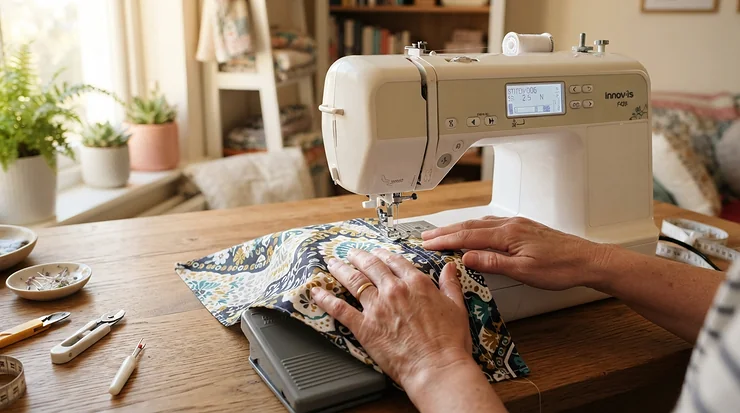
A sewing embroidery combo is a single computerised machine that does two jobs. It sews everyday seams, hems, buttonholes and decorative stitches, and it embroiders, moving a hooped piece of fabric under the needle to stitch a digitised design. You switch modes by attaching an embroidery unit or swinging out an arm. That means one footprint and one power socket for two crafts.
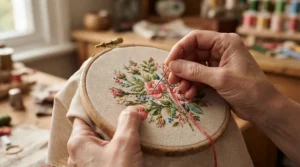
Picture your spare-room table. On one side sits a sewing machine, on the other an embroidery machine, and between them a tangle of cables, bobbins and good intentions. A sewing embroidery combo collapses that into one tidy station. Machine embroidery, as Wikipedia’s overview explains, runs from manual free-motion work on a basic zigzag machine to fully computerised designs loaded from a file. Every machine in this guide sits at the computerised end.
Two honest notes before we start. First, everything here comes from published specifications, UK retailer listings and whatever owner feedback I could verify. I haven’t bench-tested these machines, and where review data was thin I say so. Second, prices are ranges drawn from UK specialist retailers at the time of research (October 2026). Always check the current price on Amazon UK before you buy.
Whether you’re hunting top sewing and embroidery machines for beginners, a sewing embroidery machine for home crafters, an affordable embroidery combo or a hobbyist budget machine, the comparison below should narrow things down fast.
Best Sewing Embroidery Combo Machines at a Glance
| Machine | Max hoop | Sewing stitches | Built-in designs | Price range | Best for |
|---|---|---|---|---|---|
| Brother Innov-is M380D | 100 x 100mm | 181 | 200 | £750-£850 | Beginners on a tight budget |
| Singer SE9180 | 170 x 100mm (hoop supplied) | 250+ | 150 | Check current price | Touchscreen lovers |
| PFAFF Creative Expect 350 | 170 x 100mm | 250 | 180 | £1,100-£1,250 | Editing without a computer |
| Janome Memory Craft 1000 | 140 x 140mm | 300 | 241 | £1,150-£1,250 | Quilters and small-space crafters |
| Brother Innov-is F580 | 180 x 130mm | 241 | 193 | £1,450-£1,700 | Garment makers who also embroider |
| bernette B79 | 260 x 160mm | 500 | 208 | £1,650-£1,750 | Big designs on a mid-range budget |
| Brother Innov-is NV2700 | 260 x 160mm | 291 | 258 | £2,400-£2,600 | Serious hobbyists and upgraders |
Read the table in two halves. The Brother Innov-is M380D wins on entry price, while the bernette B79 and Brother Innov-is NV2700 win on hoop size, which decides how big your embroidery can be in one go. The middle three suit crafters who want a bigger hoop than the budget pick without paying premium money. Prices at specialist UK retailers differ from Amazon UK listings, so treat every figure as a guide.
💬 Just one click — help others make better buying decisions too!😊
Top 7 Sewing Embroidery Combo Machines: Expert Analysis
Each machine below is analysed from its real specifications and the verifiable feedback I could find. I’ve ordered them roughly from budget to premium.
1. Brother Innov-is M380D — lowest entry price with Wi-Fi
The Brother Innov-is M380D is the gateway machine of this list, the cheapest route here into a sewing embroidery combo that also talks to your phone. It has a 100 x 100mm hoop (about four inches square), 200 built-in designs (65 of them Disney), 181 sewing stitches including 10 buttonholes, and 11 embroidery fonts. Wi-Fi and the Artspira app let you send designs wirelessly. Embroidery tops out at 400 stitches a minute, against 850 for sewing.
That small hoop is the story. It’s perfect for monograms, pocket logos and appliqué, and hopeless for a jumper back. Based on the spec comparison, the M380D suits beginners who want to personalise gifts and kids’ clothes without a four-figure outlay.
Verifiable UK owner feedback was thin at the time of research. I found only a single retailer-page comment about growing comfortable with the stitch range, which is too little to claim a consensus, so treat star ratings with caution.
Pros:
- ✅ Lowest entry price in this round-up
- ✅ Wi-Fi and app transfer at a beginner price
- ✅ Generous 181-stitch sewing library
Cons:
- ❌ Small 100 x 100mm embroidery hoop
- ❌ Slowest embroidery speed here
Around £800 (£750-£850 range). It’s good value if your projects stay small.
2. Singer SE9180 — big touchscreen, huge stitch library
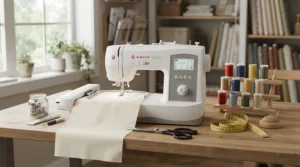
The Singer SE9180 is built around a 7-inch colour touchscreen, which makes browsing stitches and previewing designs feel closer to using a tablet. Over 250 built-in stitches (with 401 stitch applications), 150 embroidery designs and 10 fonts cover most beginner needs. Speeds are up to 800 stitches a minute sewing and 450 embroidering. The mySewnet app handles wireless transfer and progress notifications.
The accessory lists I found show a 170 x 100mm hoop, but a couple of listings quote a larger area. Confirm the hoop size in the product specification before ordering. The stitch library is the real draw: if you sew garments or home décor more than you embroider, the SE9180 gives you range without a premium-brand price tag.
I couldn’t verify enough UK owner reviews to summarise sentiment fairly, and I couldn’t pin down a consistent UK price either. Check both before committing.
Pros:
- ✅ Large 7-inch colour touchscreen
- ✅ Over 250 stitches for varied sewing
- ✅ Wi-Fi transfer via mySewnet app
Cons:
- ❌ Hoop size varies between listings
- ❌ Few verifiable UK owner reviews
Check the current price. The value verdict depends on what you actually find in the listing.
3. PFAFF Creative Expect 350 — edit designs without software
The PFAFF Creative Expect 350 is a design-editing machine in disguise. You can move, combine, rotate (in 1, 10 and 90 degree steps), mirror and scale designs on its 7-inch screen with no computer involved. It has 180 built-in designs, 10 fonts in three sizes, 250 sewing stitches, a 170 x 100mm hoop, and a 100 x 100mm hoop for smaller work. Speeds are 850 stitches a minute sewing and 450 embroidering, with 165mm of sewing space.
In practice, on-screen editing means you can fix a badly placed monogram at the machine instead of re-exporting from software. One catch: imported designs must be in PFAFF’s vp3 format, so check your design sources first. It’s Wi-Fi-ready and also takes USB.
I found no verifiable pool of UK owner reviews. Retailer pages carry only generic shop praise, which says nothing about this model.
Pros:
- ✅ Full on-screen design editing
- ✅ Two hoops supplied, including a small one
- ✅ Wi-Fi-ready with USB backup
Cons:
- ❌ Imports need vp3 files
- ❌ Hoop no bigger than budget rivals
Around £1,150-£1,200 (£1,100-£1,250 range). It’s a fair price if editing at the machine matters to you.
4. Janome Memory Craft 1000 — compact swing-out arm, 300 stitches
The Janome Memory Craft 1000 keeps the embroidery arm built in and swings it out when needed, so you never lug a separate unit around. It offers 300 stitches including 15 buttonholes, 241 built-in designs, 11 fonts and a 140 x 140mm square hoop. Sewing runs at 860 stitches a minute and embroidery at up to 660. A touchscreen with stylus handles on-screen resizing, rotating and flipping.
A square hoop sounds modest, but it suits quilt blocks, cushion corners and square motifs better than a long, narrow area. Expect to transfer designs by USB, because UK retailer information confirms this machine isn’t Wi-Fi enabled. That’s a small inconvenience if you only use a handful of designs.
I couldn’t verify UK owner review themes, so I’d rather say so than guess.
Pros:
- ✅ Built-in swing-out embroidery arm
- ✅ 300 stitches for dressmaking variety
- ✅ Square 140 x 140mm hoop suits quilting
Cons:
- ❌ USB-only design transfer
- ❌ Hoop smaller than 180mm-class rivals
Around £1,200 (£1,150-£1,250 range). It’s strong value for quilters who want stitch variety.
5. Brother Innov-is F580 — beginner-friendly with a 180 x 130mm hoop
The Brother Innov-is F580 steps up the hoop to 180 x 130mm, which covers a chest logo or a tea-towel motif comfortably. It has 241 sewing stitches including 10 buttonholes, 193 built-in designs, 13 embroidery fonts, 5 sewing fonts and Wi-Fi with the Artspira app. The 190mm (7.4 inch) workspace to the right of the needle gives bulky projects some breathing room. A UK retailer listing shows a three-year parts and labour guarantee.
The advanced needle threader, drop-in bobbin and speed slider are the kind of unglamorous features that save beginners from frustration. This is a sensible sewing embroidery machine for home crafters who want one machine to last through several skill levels.
I found no verifiable UK owner review data for this model, so I can’t summarise sentiment honestly.
Pros:
- ✅ Mid-size 180 x 130mm hoop
- ✅ Wi-Fi and Artspira app support
- ✅ Three-year guarantee at one UK retailer
Cons:
- ❌ Pricey versus smaller-hoop rivals
- ❌ No verified owner review pool
Roughly £1,450-£1,700 depending on retailer. It’s good value if you’ll use both sewing and embroidery regularly.
6. bernette B79 — biggest hoop for the money
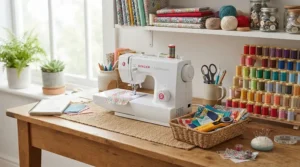
The bernette B79 is the loophole in this list: a 260 x 160mm hoop, usually a premium feature, at a mid-range price. It offers 500 sewing stitches (133 decorative, 35 quilting, 17 buttonholes), 208 embroidery designs plus 7 alphabets, 1,000 stitches a minute sewing and 850 embroidering. Three hoops come with automatic hoop detection. Dual feed, a knee lift, an automatic thread cutter and a straight stitch plate round it out. The embroidery module detaches.
Retailer information says it accepts most embroidery file formats, which removes a common conversion headache. The 5-inch screen is smaller than some rivals, and design transfer is by USB.
A retailer calls it the brand’s best-selling combo, but that’s a seller claim rather than owner review data. I couldn’t verify independent review themes.
Pros:
- ✅ Huge 260 x 160mm embroidery area
- ✅ Dual feed and 500 stitches
- ✅ Three hoops with auto detection
Cons:
- ❌ Smaller 5-inch screen
- ❌ USB transfer only
Around £1,700 (£1,650-£1,750 range). It’s excellent value if hoop size is your priority.
7. Brother Innov-is NV2700 — premium workhorse with auto tension
The Brother Innov-is NV2700 is the machine you buy when you’ve outgrown smaller hoops. The 260 x 160mm area is paired with 258 built-in designs, 140 frame pattern combinations, 13 fonts and 291 sewing stitches. Speeds hit 850 stitches a minute for both modes. Fabric detection adjusts tension automatically, and the LED-pointer embroidery foot helps you place designs accurately. Colour sorting groups matching thread colours, saving thread changes on multi-design layouts.
Two hoop sets (260 x 160mm and 180 x 130mm) ship in the box. Wi-Fi transfer uses Brother’s Design Database Transfer, which is Windows-only, though the Artspira app and USB give alternatives. A retailer describes it as the replacement for the NV2600.
I couldn’t verify UK owner review themes, so I’m leaving sentiment out rather than inventing it.
Pros:
- ✅ Large 260 x 160mm embroidery area
- ✅ Automatic tension and height adjustment
- ✅ Colour sorting saves thread changes
Cons:
- ❌ Highest price on this list
- ❌ Wi-Fi tool is Windows-only
Around £2,500 (£2,400-£2,600 range). It’s worth it only if you’ll use the large hoop regularly.
Spec Sheet Face-Off
| Machine | Max hoop | Connectivity | Screen | Best for |
|---|---|---|---|---|
| Brother Innov-is M380D | 100 x 100mm | Wi-Fi, USB | Colour LCD touchscreen | First-timers |
| Singer SE9180 | 170 x 100mm | Wi-Fi (mySewnet) | 7-inch colour touchscreen | Big-screen browsing |
| PFAFF Creative Expect 350 | 170 x 100mm | Wi-Fi-ready, USB | 7-inch colour touchscreen | On-screen editing |
| Janome Memory Craft 1000 | 140 x 140mm | USB only | Colour touchscreen with stylus | Quilters |
| Brother Innov-is F580 | 180 x 130mm | Wi-Fi, USB | Colour LCD touchscreen | All-rounders |
| bernette B79 | 260 x 160mm | USB | 5-inch colour touchscreen | Large designs |
| Brother Innov-is NV2700 | 260 x 160mm | Wi-Fi, USB | 4.9-inch colour touchscreen | Upgraders |
Connectivity separates these machines more than screens do. The Janome Memory Craft 1000 and bernette B79 rely on USB, which suits crafters happy to carry a memory stick. The Brother Innov-is F580 and Brother Innov-is NV2700 add wireless convenience, and the PFAFF Creative Expect 350 adds a file-format restriction to consider.
Home Crafters in Practice: Three Real-World Scenarios
These are illustrative buyer profiles, not real people. They show how the machines above map to different budgets and habits.
The gift-maker (budget around £800, kitchen table, a few projects a month). Monogrammed tea towels, baby bibs and pocket logos fit a 100mm hoop. The Brother Innov-is M380D covers everything with room to spare and keeps the kitchen table usable between sessions. If embroidery becomes the habit and the hoop starts to feel cramped, you’ve lost little money finding out.
The family seamstress (budget around £1,200-£1,700, dedicated corner, weekly use). School uniforms, name labels and the occasional jacket back call for a mid-size hoop and reliable sewing. The Brother Innov-is F580 offers a 180 x 130mm hoop and a three-year guarantee at one UK retailer. The PFAFF Creative Expect 350 is the alternative if you’d rather tweak designs on-screen.
The quilter-embroiderer (budget around £1,200-£1,750, spare room, several sessions a week). Quilt blocks, labels and cushion panels reward either a square hoop or a very large one. The Janome Memory Craft 1000 suits blocks, while the bernette B79 suits oversize motifs and borders. Both gain from the spare-room space, because large hoops need clearance.
Home Craft Setup: Getting Your Machine Running Properly
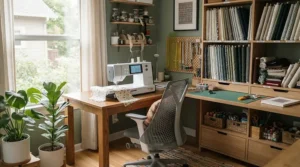
A good home craft setup is less about the machine and more about the table, light and habits around it. Here’s a practical first-30-days guide.
Choose the spot. The embroidery arm travels both ways, so leave clear space behind and beside the machine. A cluttered surface is the quickest way to a jammed hoop.
Light it properly. Built-in LEDs help, but an adjustable task lamp makes spotting thread colours and puckering far easier.
Stock the basics. Dedicated embroidery thread, stabiliser (backing) and fresh needles matter. Stabiliser prevents puckering and keeps stitches crisp, and the right type depends on your fabric.
Run a test stitch-out. Use scrap fabric, a built-in design and a plain stabiliser before touching a good garment.
Learn hooping early. Fabric should be taut without being stretched. Most first-timer disasters come from hooping, not from the machine.
Maintain a rhythm. Brush out lint regularly, change needles often, and keep the manual close. Little and often beats a big clean-up once a year.
✨ Don’t Miss These Exclusive Deals! 🧵
🔍 Take your home craft setup to the next level with these carefully selected machines. Click on any highlighted item to check current pricing and availability on Amazon UK. These picks will help you create authentic, personalised projects your family will love!
Common Problems and Fixes
Almost every beginner hits the same snags. Here are the usual culprits and what to try.
Puckered fabric around the design. This usually means the wrong stabiliser or loose hooping. Try a firmer backing, re-hoop the fabric flat and taut, and slow down on stretchy fabrics.
Thread shredding or breaking. Rethread the machine fully with the presser foot raised, fit a new needle, and check you’re using proper embroidery thread rather than a thick sewing thread.
Messy loops on the underside. This is commonly a threading error. Remove the thread entirely and start again, making sure the thread sits properly in the tension discs.
Gaps between outline and fill. Loose hooping or a lightweight stabiliser lets fabric shift. Add backing, tighten the hoop, and avoid dragging on the fabric.
A design won’t load. Check the file format. The PFAFF Creative Expect 350 needs vp3 files, while the bernette B79 is described as accepting most formats. The Janome Memory Craft 1000 transfers by USB only, so make sure the stick is recognised first.
Top Sewing and Embroidery Machines for Beginners: Where to Start
If you’re after the top sewing and embroidery machines for beginners, three stand out for different reasons. The Brother Innov-is M380D is the lowest-risk start: cheap, Wi-Fi equipped and simple enough to learn in an afternoon. The Brother Innov-is F580 costs more but gives a bigger hoop and a guarantee, so you’re less likely to outgrow it. The PFAFF Creative Expect 350 suits beginners who want to correct designs at the machine.
A caution applies to every one of these top sewing and embroidery machines for beginners. Combos have a steeper learning curve than basic sewing machines because you’re juggling hooping, stabiliser, thread and file formats on top of ordinary sewing. Budget a few weekends of experimenting on scrap fabric before judging the machine. Beginners also benefit from the built-in designs first, since they avoid compatibility problems while you learn.
How to Choose a Sewing Embroidery Combo
Use these seven steps to narrow your shortlist.
- Decide your biggest project. The hoop caps your embroidery size, so pick the machine whose largest hoop fits your most ambitious idea. Larger designs can be split across multiple hoopings, but that takes patience.
- Check the sewing side honestly. If you sew garments weekly, look at sewing space, stitch count and buttonhole styles, not just the embroidery specification.
- Check file formats and transfer. Wi-Fi sounds convenient, but format compatibility matters more. Confirm your design sources work with the machine.
- Value on-screen editing. Moving, rotating and scaling at the machine saves software costs. Most machines here offer some editing, but depth varies.
- Look at embroidery speed. The gap between 400 and 850 stitches a minute is real on larger designs, though it matters less for monograms.
- Weigh the support. A guarantee, a local dealer and servicing options matter over a decade. UK specialist The Sewing Studio’s embroidery machine buyer guide is a handy cross-check on hoop sizes and tiers.
- Budget the extras. Stabiliser, threads, needles and software add up, so keep a reserve beyond the machine price.
Affordable Embroidery Combo: Where the Value Really Sits
Defining an affordable embroidery combo depends on your starting point. One UK specialist’s guidance suggests entry-level combination machines typically start from around £1,000, yet the Brother Innov-is M380D sits below that at roughly £800. That’s why it’s the headline affordable embroidery combo in this guide.
Consider the alternative. A decent standalone sewing machine can cost a few hundred pounds, and an embroidery-only machine like the Janome Memory Craft 100E sits around £750 at a UK retailer. Buying separately lands somewhere around £900-£1,100 before you’ve sorted bobbins and stabiliser. Against that, a sewing embroidery combo in the £800-£1,250 bracket often looks like the cheaper route, as long as you accept compromises on hoop size.
The middle of the table, the PFAFF Creative Expect 350 and Janome Memory Craft 1000, is where many crafters find the balance between affordable embroidery combo pricing and capability. Move up to the bernette B79 only if big hoops matter to you.
Hobbyist Budget Machine: What You Can and Can’t Compromise On
A hobbyist budget machine doesn’t have to be a bad machine, but you should know where the corners get cut. Hoop size is the obvious one. Smaller hoops, like the Brother Innov-is M380D‘s 100 x 100mm, are workable for monograms and gifts, awkward for large motifs.
Fewer built-in designs is usually harmless, since most crafters download or buy designs anyway. Wireless transfer is nice but optional, as the Janome Memory Craft 1000 shows.
What you shouldn’t compromise on in a hobbyist budget machine: an automatic needle threader, thread sensors, a decent sewing stitch range, and accessible support. Skimp there and you’ll feel it every session. Features that look impressive but rarely matter include huge built-in design counts and flashy touchscreens. Spend your money on the hoop you’ll actually use and the support you’ll eventually need.
Sewing Embroidery Combo vs Separate Machines
| Criteria | Sewing embroidery combo | Separate machines | Best for |
|---|---|---|---|
| Table space | One footprint | Two footprints | Small homes: Janome Memory Craft 1000 |
| Total cost | Often lower for entry level | Higher once both are bought | Budgets: Brother Innov-is M380D |
| Switching modes | Attach or swing out arm | No switching at all | Casual crafters: Brother Innov-is F580 |
| Largest hoop | Up to 260 x 160mm in this guide | Larger on dedicated models | Big designs: bernette B79 |
| Both jobs at once | No, one at a time | Yes | Production crafters: separate machines |
The honest trade-off is simple. A sewing embroidery combo saves space and money but can only do one job at a time, so it’s wrong for anyone running both crafts in parallel. Dedicated embroidery machines also reach bigger hoops: Expert Reviews’ earlier buying guide named the Brother Innov-is M230e as its embroidery pick at around £700 when reviewed, and its sewing machine guide shows how far a basic sewing machine budget stretches. For most home crafters who sew first and embroider second, the combo still wins on convenience.
Common Mistakes When Buying a Sewing Embroidery Combo
Buying too small a hoop. It’s the most common regret. If you’ve pictured jacket backs or large panels, a 100 x 100mm hoop will frustrate you quickly.
Ignoring running costs. Stabiliser, embroidery thread and needles recur. Factor them in, not just the sticker price.
Assuming Wi-Fi means freedom. Wireless sounds universal but format limits still apply. The PFAFF Creative Expect 350 needs vp3 files, and Brother’s Design Database Transfer is Windows-only.
Buying from unknown sellers. A sturdy machine from a reputable dealer matters more than a small saving. The Independent’s sewing writer points readers to the Sewing Machine Trade Association for finding reputable independent dealers, a sensible cross-check before you commit.
Skipping servicing plans. A combo has more moving parts than a basic machine. Know where you’d get it serviced before you need to.
Long-Term Cost & Maintenance
Think of a sewing embroidery combo as a five-to-ten-year purchase rather than a gadget. UK retailer guidance suggests well-maintained domestic machines can last a decade or more. As a simple illustration, a machine around £1,200 used for roughly three projects a month over five years works out at about £6-£7 per project before consumables.
Consumables add to that. Needles, bobbin thread, stabiliser and embroidery thread are the recurring bills, and they scale with how often you embroider. Servicing adds a periodic cost but protects the investment, particularly on machines with detachable embroidery units.
Warranty length matters here too. A UK retailer listing shows a three-year parts and labour guarantee on the Brother Innov-is F580, which is worth weighing against cheaper machines without clear cover. Premium machines such as the Brother Innov-is NV2700 cost more upfront but spread that cost over heavier use. Budget machines like the Brother Innov-is M380D keep the downside small if embroidery turns out to be a passing phase.
FAQ
❓ Can a sewing embroidery combo sew and embroider at the same time?
❓ Do I need special software to use my own designs?
❓ How much should I spend on an affordable embroidery combo?
❓ Is a bigger embroidery hoop always better?
❓ What stabiliser and thread do I need for machine embroidery?
Conclusion
Choosing a sewing embroidery combo comes down to three questions: how big will your designs be, how much sewing will you do, and how much support do you want? For first-timers, the Brother Innov-is M380D is the low-risk entry, while the Brother Innov-is F580 and PFAFF Creative Expect 350 give you more room to grow. Quilters should look hard at the Janome Memory Craft 1000, and anyone who dreams in large motifs should compare the bernette B79 and Brother Innov-is NV2700. The Singer SE9180 deserves a look if the big touchscreen appeals, but confirm the hoop size and UK price first.
Remember the honest caveats. I haven’t tested these machines, owner reviews were thin for most of them, and prices vary by retailer. Check current prices on Amazon UK and ask a dealer about servicing before you commit. Buy for the projects you’ll actually make, not the ones you might make someday.
Recommended for You
- Sewing And Embroidery Machine: 7 Best Buys (Avoid Mistakes) 2026
- Combination Sewing Machines For Beginners: 7 Best Buys (2026)
- Combination Sewing Machine: 7 Best UK Picks (2026)
Disclaimer: This article contains affiliate links. As an Amazon Associate, I earn from qualifying purchases. If you purchase products through these links, we may earn a small commission at no additional cost to you.
✨ Found this helpful? Share it with your friends! 💬🤗
