
In This Article
An all-in-one sewing machine under £800 is a single machine that covers everyday sewing, buttonholes and decorative stitching, and ideally machine embroidery too, without pushing your budget past £800. That embroidery unit is what separates a genuine all-in-one from a merely very good sewing machine.
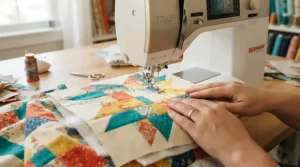
Here is the awkward truth I found while digging through UK stock: true sew-and-embroider combos at this price are rare. Many models that dominate American roundups simply aren’t sold on British shelves, and the handful that are tend to sit just above the line. Only one machine in this guide, the Brother Innov-is M380D, ticks every box. It reaches the all-in-one sewing machine under £800 mark only when a dealer trims its list price.
So this guide plays it straight. You get one true combo, plus six proven machines (sewing, embroidery and finishing) that let you build your own all-in-one setup for less. Every pick comes with spec-by-spec reasoning, what reviewers actually reported, and who should (and shouldn’t) buy it. Prices are ranges captured at the time of research, so always check current price before you commit.
Quick Comparison: 7 Machines at a Glance
| Machine | Type | Standout Spec | Price Range | Best For |
|---|---|---|---|---|
| Brother Innov-is M380D | Sewing, quilting + embroidery combo | 181 stitches, 200 designs, 100 x 100 mm hoop | Around £800 when discounted | One-box all-in-one buyers |
| Brother Innov-is M230e | Embroidery only | Colour touchscreen, USB import | £700s (2023 test) | Adding embroidery to a machine you own |
| Brother Innov-is A80 | Computerised sewing | 8 one-step buttonholes, twin-needle capable | Mid-£400s | Garment makers wanting stitch variety |
| Janome Sewist 725S | Mechanical sewing | Foot pressure control, auto-declutch bobbin | Around £350 | A dependable everyday base machine |
| Singer Heavy Duty 4432 | Heavy-duty sewing | Metal frame, strong motor | Mid-£300s | Denim, curtains, leather |
| Janome 6234XL | Overlocker | Self-threading lower looper | Around £500 | Shop-quality seams and hems |
| Singer Tradition 2250NT | Mechanical sewing | Built-in needle threader | Around £150 | Absolute beginners |
Looking at the comparison above, the Brother Innov-is M380D is the only row that delivers real embroidery plus sewing in one box, but you pay for that convenience at the very top of the budget. If you’d rather split the spend, the Singer Tradition 2250NT plus the Janome 6234XL lands around £650 and covers sewing and professional edge finishing. Embroidery-curious buyers who already own a machine should look hard at the Brother Innov-is M230e, though its 2023 test price leaves little change from £800.
💬 Just one click — help others make better buying decisions too!😊
Top 7 Machines for an All-in-One Sewing Machine Under £800: Expert Analysis
1. Brother Innov-is M380D — the genuine sew-and-embroider combo
Most “all-in-ones” are sewing machines wearing a clever sticker. The Brother Innov-is M380D is the real thing: a compact machine with a detachable embroidery unit.
It offers 181 built-in stitches (including 10 buttonholes), 200 embroidery designs and a 100 x 100 mm hoop. Sewing tops out around 850 stitches per minute, embroidery around 400. In practice, that hoop is roughly coaster-sized, which is lovely for monograms, pocket motifs and patches, and hopeless for a back-of-jacket crest.
Based on the spec comparison, this is the strongest single answer to the keyword. Thread sensors and an automatic cutter remove the fiddliest beginner moments, and it recognises thread charts from three other manufacturers, so you aren’t locked into one thread brand.
Review evidence for this newer model is still thin in the sources I could verify. One buyer comment reported it felt perfect once they’d learned the stitches. Owners of its predecessor, the M280D, praised ease of use while warning that the Disney designs eat time and thread colours.
Pros:
- ✅ Genuine sewing, quilting and embroidery in one machine
- ✅ 181 stitches plus on-screen design editing
- ✅ Thread sensors and cutter calm beginner nerves
Cons:
- ❌ Small 100 x 100 mm embroidery area
- ❌ Reaches £800 only when discounted
Price check: UK dealers have listed it around £800 against a list price closer to £1,000, so check current price. It is worth it at or near the cap, and a stretch above it.
2. Brother Innov-is M230e — focused beginner embroidery add-on
The Brother Innov-is M230e does one job, embroidery, and earns its praise for making that job feel easy.
It pairs a 3.7-inch colour touchscreen with a 100 x 100 mm hoop, a USB port and roughly 400 stitches per minute. Thread sensors warn you before a bobbin runs dry mid-design. One caution: a UK retailer lists 80 built-in designs, while Expert Reviews’ 2023 write-up cited a larger pattern count, so confirm the figure on the product page you buy from.
Here’s what most buyers overlook: this is not an all-in-one. It is the “add-on” half of a two-machine setup, ideal if you already own something like the Janome Sewist 725S. At the 2023 tested price in the £700s, pairing it with anything else drifts past £800, so buy it on its own merits.
Expert Reviews found it threaded and stitching multi-coloured designs within an hour, and described it as a focused machine for embroidery fans. Their one gripe was that the instructions could be clearer. A “great at what it’s meant to do” owner comment turns up on resale listings too.
Pros:
- ✅ Intuitive colour touchscreen eases first designs
- ✅ USB port for importing your own designs
- ✅ Three-year warranty reported by UK retailers
Cons:
- ❌ Embroidery only, so no sewing whatsoever
- ❌ Small 100 x 100 mm field limits design size
Price check: roughly the £700s based on 2023 testing, so check current price. It is a fine value pick only if you already own a sewing machine.
3. Brother Innov-is A80 — mid-range computerised sewing workhorse
If embroidery isn’t on your wish list, the Brother Innov-is A80 is where the stitch menu gets serious without the price tag following.
Sew magazine’s directory lists 80 stitches, eight one-step buttonholes, twin-needle capability, one-action needle threading, automatic reinforcement and a lock-stitch button. Translation: eight buttonhole styles cover everything from shirt placards to bag straps, and twin-needle topstitching gives jersey hems that professional parallel finish. The lock-stitch button replaces fiddly manual reversing at seam ends.
Based on those specs, this suits dressmakers who’ve outgrown a basic machine but don’t want to pay for hoops and designs they’d never use. At the mid-£400s it also leaves around £350 under the cap, which could fund thread, stabiliser, classes or a second machine. Fine tension control, a transparent presser foot and a hard carry case round out a thoughtful package.
I couldn’t find an independent review pool large enough to summarise fairly, so treat this entry as spec-led analysis rather than crowd-verified. That’s a genuine limitation worth knowing before you buy.
Pros:
- ✅ Eight one-step buttonholes for varied garments
- ✅ Twin-needle capable for professional topstitching
- ✅ Automatic needle threader and lock-stitch button
Cons:
- ❌ No embroidery capability whatsoever
- ❌ Independent review evidence is thin
Price check: mid-£400s per Sew magazine’s listing, so check current price. Good value for sewists who want stitch variety over embroidery.
4. Janome Sewist 725S — best all-round mechanical base
Think of the Janome Sewist 725S as the sensible friend who always turns up on time.
It has 23 stitches, a one-step buttonhole, LED lighting and a hard cover, weighing around 6.7 kg with a two-year warranty. The clever bits are an extra-high presser foot lift (bulky layers slide underneath), adjustable foot pressure (slippery fabrics and appliqué feed properly) and a top-loading bobbin with an auto-declutch, which stops the needle bobbing while you wind.
Here’s the practical reading: 23 stitches sounds modest, yet most everyday sewing uses a handful. The Janome Sewist 725S makes an excellent base for a beginner multi-craft setup because it does the fundamentals beautifully and leaves budget for add-ons. It is mechanical, so there’s no embroidery, no memory and no screen.
Expert Reviews named it their best all-rounder, praising it for both beginners and intermediate sewers. They also noted it feels robust without hopping around the table.
Pros:
- ✅ Foot pressure adjustment handles tricky fabrics
- ✅ Auto-declutch bobbin winding is safer
- ✅ Extra-high presser foot lift for bulky layers
Cons:
- ❌ Only 23 stitches in total
- ❌ No embroidery or computerised memory
Price check: around £350 at the time of Expert Reviews’ testing, so check current price. Strong value as a foundation machine.
5. Singer Heavy Duty 4432 — power for denim, curtains and leather
Some machines tiptoe through fabric; the Singer Heavy Duty 4432 marches.
Expert Reviews credits it with a powerful motor, a metal frame and a stainless steel plate, plus 32 stitches, a one-step buttonhole, an automatic needle threader and a free arm. At about 6.4 kg it isn’t heavy to lift, but it behaves like a machine twice its weight when you feed it denim or several layers of curtain lining.
That makes it the natural “heavy” partner to a delicate-fabric machine such as the Janome Sewist 725S. Together they cost under £700, and they cover both ends of the fabric spectrum. For a single-machine household doing home furnishings, the Singer Heavy Duty 4432 alone is a smart pick.
Reviewers found it a real workhorse that stitches surprisingly quickly. The gripes were a flimsy dust cover and a test unit that arrived without printed English instructions, though a tutorial CD helped. Check the box contents with your seller.
Pros:
- ✅ Strong motor and metal frame
- ✅ Automatic needle threader that works well
- ✅ Quick stitching through multiple layers
Cons:
- ❌ Flimsy dust cover reported
- ❌ Printed documentation may be missing
Price check: mid-£300s per 2023 testing, so check current price. Excellent value if heavy fabrics are your reality.
6. Janome 6234XL — overlocker for professional edges
An overlocker trims, stitches and wraps an edge in one pass, and the Janome 6234XL is the one reviewers keep recommending.
Expert Reviews highlights twin needles, colour-coded threading guides, a self-threading lower looper and a machine that arrives already threaded with cones. A rolled-hem conversion works without swapping the needle plate, and a ten-year warranty is unusually generous. It weighs around 9 kg, so it’s a “stays on the desk” machine.
What the spec sheet won’t tell you, but the reasoning makes clear: an overlocker cannot sew buttonholes or topstitch, so it is a partner, never a replacement. Reviewers say the same, recommending it as a second machine alongside your main one. Paired with the Singer Tradition 2250NT you spend about £650 and get both basic sewing and ready-to-wear finishing. Paired with the Janome Sewist 725S, you edge past £800.
Expert Reviews reported smooth, quiet running with no puckered or stretched edges, and called the instructional DVD genuinely useful.
Pros:
- ✅ Colour-coded guides and self-threading lower looper
- ✅ Ten-year warranty reported
- ✅ Rolled hem conversion without changing needle plate
Cons:
- ❌ Overlocker only, so you need a sewing machine too
- ❌ Heavy at around 9 kg
Price check: around £500 at testing, so check current price. Valuable if garment finishing matters more than embroidery.
7. Singer Tradition 2250NT — cheapest sensible starter
Every build needs an affordable anchor, and the Singer Tradition 2250NT is mine for the budget all-in-one machine route.
It offers ten stitches, a four-step buttonhole, adjustable stitch length, a built-in needle threader and a free arm that doubles as accessory storage. At roughly 6.5 kg with a two-year warranty, it’s compact enough for a shelf. Ten stitches cover seams, hems and basic topstitching, which is genuinely most of what beginners do.
Based on the spec comparison, this is the cheapest way into my “Build A” setup below. Pair it with the Janome 6234XL and you have a sewing-plus-finishing duo for around £650. It won’t embroider, and it won’t impress stitch-collectors.
Expert Reviews called it a great-performing starter, with the usual caveats: the bobbin isn’t the easiest to reach, and the machine is prone to vibrating while in use.
Pros:
- ✅ Compact, light and easy to thread
- ✅ Built-in needle threader saves squinting
- ✅ Free arm doubles as accessory storage
Cons:
- ❌ Awkward bobbin access reported
- ❌ Vibrates noticeably during use
Price check: around £150 at testing, so check current price. Superb value as a first machine.
How to Choose an All-in-One Sewing Machine Under £800
Choose by must-have crafts first, then hoop size, ease of use and backup support. Here are the steps I’d follow:
- Start with the craft, not the stitch count. Embroidery, quilting, garment making and curtains pull you towards very different machines.
- Measure the hoop. A 100 x 100 mm field is about 4 inches square. That’s fine for monograms, but frustrating for large designs.
- Count stitches you’ll actually use. A few dozen cover most projects, so 181 stitches is generous rather than essential.
- Test the beginner comforts. Look for easy threading, thread sensors, a start/stop button and a clear screen.
- Check parts and service. The testers at Expert Reviews advise confirming the brand will keep stocking bobbin cases, belts and foot controls for years.
- Read the warranty. Two years is typical; some Brother retailers quote three, and the Janome 6234XL reportedly carries ten.
- Budget for extras. Thread, stabiliser, needles and (for embroidery) design software all add up.
Top All-in-One Sewing Machines for Beginners: What Actually Helps
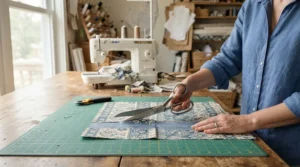
If you’re shopping for the top all-in-one sewing machines for beginners, ignore the headline stitch count and look at friction. Where will a new sewer get stuck? Threading, bobbin winding, tension and, for embroidery, hooping fabric flat.
The Brother Innov-is M380D tackles most of that with thread sensors, an automatic cutter and on-screen editing. The Janome Sewist 725S helps with an auto-declutch bobbin that makes winding safer. The Singer Tradition 2250NT keeps things simple with a built-in needle threader, though its awkward bobbin is the sort of gotcha that tests a beginner’s patience.
Be honest with yourself, too: no machine is truly set-and-forget. Embroidery adds stabiliser choices and hooping technique, and that learning curve is real. Browsing Sew magazine’s machine directory is a handy way to see how UK-focused editors describe entry-level models, including the Brother Innov-is A80.
For beginners who want embroidery eventually but not immediately, my reasoning favours starting with a capable sewing machine and adding a hoop-based machine later. Impulse buying a combo you won’t use for six months rarely pays off.
Value All-in-One Sewing Machine: Where £800 Goes Furthest
A value all-in-one sewing machine isn’t the cheapest one; it’s the one that gives the most usable crafts per pound. For UK dealers, the Sewing Studio suggests budgeting somewhere between £500 and £1,500 for a reliable, versatile machine, which puts £800 in the credible middle.
Value Comparison: Cost per Craft
| Setup | Approx. Spend | Crafts Covered | What’s Missing |
|---|---|---|---|
| Brother Innov-is M380D alone | Around £800 | Sewing, quilting, small embroidery | Overlocking, large hoops |
| Singer Tradition 2250NT + Janome 6234XL | Around £650 | Sewing plus pro edge finishing | Embroidery |
| Janome Sewist 725S + Singer Heavy Duty 4432 | Around £685 | Delicate and heavy fabrics | Embroidery, overlocking |
| Brother Innov-is A80 alone | Mid-£400s | 80-stitch sewing, buttonholes | Embroidery |
| Brother Innov-is M230e alone | £700s | Small-hoop embroidery | Sewing |
Reading this value comparison, the Brother Innov-is M380D wins on breadth but loses on depth: its small hoop and single-needle sewing mean you’ll eventually hit ceilings. The two-machine builds cost less and each machine does its job better, at the price of desk space. For context, the Singer Legacy SE300 lists around £1,000 at Hobbycraft, with a much larger 10¼ x 6 inch hoop, which shows what a stretch beyond the cap actually buys.
Budget All-in-One Machine: Spending Less Without Regret
A budget all-in-one machine in the true sense, sewing plus embroidery under about £500, doesn’t really exist in current UK stock. What you can buy is a budget sewing machine with room to grow.
At the very bottom, Expert Reviews’ picks include the MEGLE FHSM-505 (12 stitches, battery-powered, no warranty) and the John Lewis JL110 (14 stitches, a four-step buttonhole, no stitch-width control and no zipper foot in the box). Both suit repairs and hems, not ambitious projects.
The sweet spot sits higher. The Singer Tradition 2250NT offers sturdy starter value, while the Brother Innov-is A80 gives you a long stitch menu without embroidery fees. My rule of thumb is simple: if you can’t name three projects that need a feature, don’t pay for it yet. Spend the savings on thread, stabiliser and a class instead, because skills outlast hardware.
All-in-One vs Separate Machines: Honest Trade-offs
| Factor | One Combo (e.g. Brother Innov-is M380D) | Separate Machines (e.g. Singer Tradition 2250NT + Janome 6234XL) | Best For |
|---|---|---|---|
| Desk space | One footprint | Two machines to house | Small flats favour the combo |
| Learning curve | One interface to learn | Two interfaces | Beginners favour the combo |
| Cost | Around £800 | Around £650 | Budget-led buyers favour separates |
| If it fails | Both crafts stall | Only one craft stalls | Frequent makers favour separates |
| Depth | Broad, shallower | Narrow, deeper | Specialists favour separates |
The table shows the real tension: convenience versus resilience. A combo keeps things neat, but a breakdown pauses everything, and embroidery hoops can’t match the capacity of a dedicated machine. Separate machines cost less here and each excels at its job, but they demand shelf space and two sets of habits.
Beginner Multi-Craft Setup: Three Realistic Builds
A beginner multi-craft setup works best when matched to a real person. Here are three profiles, each with a budget, environment and frequency.
Build A: The Garment Starter. You’re a student sewing two evenings a week in a shared flat. The Singer Tradition 2250NT plus Janome 6234XL costs around £650. You get basic sewing and tidy, shop-quality seams on stretch fabrics, and the kit can live in a wardrobe between sessions.
Build B: The Personaliser. You make gifts, towels and tote bags every weekend. The Brother Innov-is M380D at around £800 gives you sewing and monogramming in one box. Small-hoop embroidery suits names and motifs, and one machine means one set of lessons.
Build C: The Home Furnisher. You sew curtains, cushion covers and occasional clothing, perhaps ten hours a month. The Janome Sewist 725S handles finer work and the Singer Heavy Duty 4432 muscles through thick layers, together around £685.
If you want embroidery later in Builds A or C, there’s room to add the Brother Innov-is M230e down the line. It would push the total beyond £800, so plan it as a second-year upgrade.
✨ Ready to Compare Current Prices?
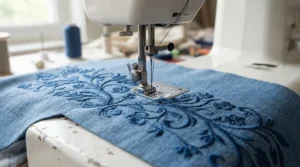
🔍 Take your beginner multi-craft setup to the next level with these carefully selected machines. Click on any highlighted product name to check current pricing and availability. The right match will help you create projects you’ll be proud to wear, gift and show off! 🧵
Your First 30 Days: Setup, Maintenance and Common Snags
New machines reward good habits. Here’s a simple first-month plan, built on reasoning rather than anecdote.
Week one: unbox and audit. Check every accessory against the manual, since reviewers have flagged missing printed instructions on some models. Thread the machine from scratch three times until it feels automatic.
Week two: practise on scraps. Test stitches on offcuts of the fabric you’ll actually use. Adjust tension in small steps, and change the needle regularly (a common rule of thumb is after roughly eight hours of sewing).
Week three: try your first project. Make something forgiving: a cushion cover or tote bag. If you own the Brother Innov-is M380D, stitch one small embroidery design on scrap fabric with stabiliser before touching a finished garment.
Week four: establish maintenance. Brush out lint around the bobbin area after each project and keep a spare bobbin case, needles and thread to hand.
Common snags and quick fixes:
- Skipped stitches: swap the needle and rethread the top thread.
- Puckered seams: loosen tension slightly and use a sharper needle.
- Thread nests: raise the presser foot before threading, then rethread fully.
Features That Actually Matter (And Those That Don’t)
Marketing loves big numbers, so let’s separate signal from noise.
Features that matter: easy threading, reliable tension, thread sensors (especially for embroidery), a clear screen, a hoop size that fits your projects, and brand backup for parts. These shape daily satisfaction far more than a spec sheet headline.
Features that matter less: huge stitch counts (181 stitches is plenty; most sewers use a few dozen), bundled novelty designs (the Brother Innov-is M380D‘s 65 Disney designs are charming but niche), and Wi-Fi extras you may never use. USB import covers design variety anyway.
The one feature people underrate is a decent free arm for sleeves and cuffs. The Singer Tradition 2250NT, the Janome Sewist 725S and the Singer Heavy Duty 4432 all include one, so you won’t struggle with small tubular items. A heavier machine also tends to stay put while you sew, which helps accuracy more than any gadget.
Common Mistakes When Buying
Mistake one: buying on stitch count alone. A machine with 300 stitches you never use can be worse than one with 23 excellent ones.
Mistake two: confusing embroidery-only machines with combos. The Brother Innov-is M230e and the Bernette B70 Deco both embroider only, so neither will sew a seam.
Mistake three: ignoring hoop size. A 100 x 100 mm hoop limits you to small designs, and larger hoops cost significantly more.
Mistake four: buying second-hand blind. A discontinued Singer Futura XL-420 still appears used at several hundred pounds in the UK, but one seller’s listing states embroidery requires connecting to a Windows PC via USB. That is a very different workflow from standalone embroidery, so verify before you buy.
Mistake five: forgetting extras. Thread, stabiliser, needles and a decent iron can add real money, so factor them into your £800.
Long-Term Cost & Maintenance
Total cost of ownership matters more than sticker price. Spread £800 over five years of three hours’ sewing a week and you’re paying around £1 per hour of use. That’s a surprisingly gentle number if the machine keeps running.
Expert Reviews notes that sewing machines can be repaired by engineers, and that spool pegs, bobbin cases, gears, belts, foot controls and motors are the usual replacement parts. So check your brand will keep stocking them, and ask whether a local dealer services computerised models, since not every repairer does.
Running costs are modest: needles, bobbins, thread and stabiliser. Embroidery adds stabiliser and many reels of thread. If you want to create or edit your own designs, dealers sometimes bundle design software, which can be valuable if your ambitions grow.
Warranties vary widely: around two years on most sewing machines, three on the Brother Innov-is M230e at some UK retailers and ten on the Janome 6234XL. A longer warranty is genuine long-term value, so weigh it alongside price.
Safety, Regulations & Your Consumer Rights
Household machines sold in Great Britain should carry UKCA or CE marking and a rating label with voltage details. Treat missing labels on a suspiciously cheap import as a red flag.
Good practice: unplug before threading or changing needles, keep fingers clear of the needle bar, and supervise children. Keep the foot pedal out of the reach of pets and small hands.
Your consumer rights are another safety net. Under the Consumer Rights Act 2015, goods must be as described, of satisfactory quality and fit for purpose. The official gov.uk consumer protection rights guidance explains the short-term right to reject faulty goods and your options for repair or replacement afterwards. Check the current detail there before you buy, particularly if you’re ordering online, and keep your receipt.
FAQ
❓ Can I really get an all-in-one sewing machine under £800 in the UK?
❓ Is the Brother Innov-is M380D good for a complete beginner?
❓ Where should I check the current price of a budget all-in-one machine?
❓ Do I need an overlocker if I buy a combo machine?
❓ How long will a machine in this price range last?
Conclusion
So, is an all-in-one sewing machine under £800 realistic? Yes, with a footnote. One genuine combo, the Brother Innov-is M380D, fits at around £800 when discounted, and it’s the best single-box answer for sewing, quilting and small embroidery. Everything else here is about building your own all-in-one, smartly.
If you want embroidery without extras, choose the Brother Innov-is M380D. For a budget all-in-one machine route, start with the Singer Tradition 2250NT and add the Janome 6234XL later. For a robust, long-lasting base, the Janome Sewist 725S is hard to beat, with the Singer Heavy Duty 4432 for thick fabrics. Garment makers who want more stitch variety should consider the Brother Innov-is A80, and anyone already sewing can add embroidery with the Brother Innov-is M230e.
My honest advice: buy for the projects you’ll make this year, not the ones you might dream about. Skills compound, and a modest machine used weekly beats a showpiece gathering dust.
Recommended for You
- All-In-One Sewing Machine: 7 Brilliant Picks For UK Crafters (2026)
- Sewing Quilting Machine For Advanced Quilters: 7 Proven Picks (2026)
- Sewing Quilting Machine: 7 Proven Picks For UK Quilters (2026)
Disclaimer: This article contains affiliate links. As an Amazon Associate, I earn from qualifying purchases. If you purchase products through these links, we may earn a small commission at no additional cost to you.
✨ Found this helpful? Share it with your friends! 💬🤗
