
In This Article
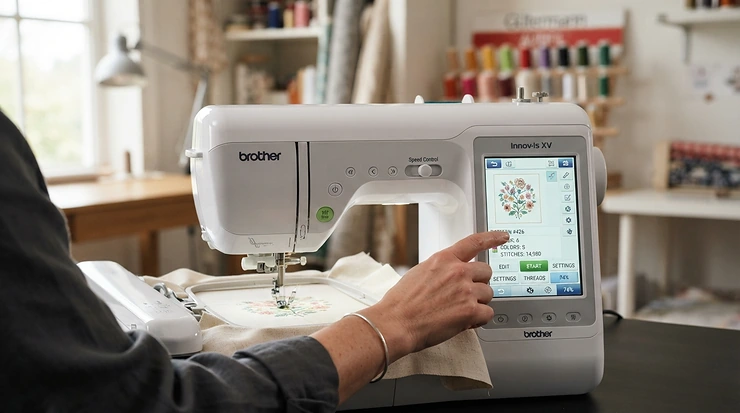
A sewing embroidery machine for small business is a computerised machine that stitches digitised designs onto fabric, caps and garments, and is robust enough to handle repeat paid orders. Some models also sew; others are embroidery-only. What matters commercially is hoop size, stitch speed, colour-change method, software support and warranty cover.
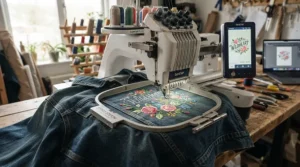
Here’s the thing nobody mentions on day one: the machine that suits a Sunday-afternoon hobbyist will sulk the moment 30 polo shirts land in your inbox. Machine embroidery has travelled a long way from punched paper tape to USB sticks and Wi-Fi transfers. Yet buying a sewing embroidery machine for small business still comes down to one blunt question: how many paid hours will this save you, and how many will it burn in rethreading, re-hooping and remakes?
This guide compares seven real machines. They run from a single-needle at around £1,600 up to a ten-needle workhorse at around £10,000, plus a premium sew-and-embroider flagship. Specs come from manufacturer and UK retailer listings. I haven’t tested any of these machines. Where independent owner reviews were thin, I say so rather than dress marketing up as feedback.
Prices are ranges at the time of research, so check current price before you commit. We’ll also cover hoops, monogramming, digitising and the rules for selling personalised goods. Those are the things that decide whether a purchase pays for itself. 🎯
Quick Comparison: Which Machine Fits Which Business?
| Machine | Type | Embroidery area | Price range | Best For |
|---|---|---|---|---|
| Janome Memory Craft MC500E LE | Embroidery-only, single needle | 280 x 200 mm | Around £1,600 | Home-based personalisers on a tight budget |
| Brother Innov-is V3LE | Embroidery-only, single needle | 300 x 200 mm | £1,800–£2,400 range | Speedy, big-field starter for gifts and apparel |
| Brother Innov-is V5LE | Sewing and embroidery combo | 300 x 200 mm | £3,300–£3,500 range | Makers who sew and embroider their own products |
| Brother PR1X | Single needle, free arm | 300 x 200 mm | £4,000–£4,700 range | Bags, sleeves and hard-to-hoop items |
| Brother PR680W | Six-needle | 300 x 200 mm | £6,600–£7,000 range | A first genuine production machine |
| Brother PR1060W | Ten-needle | 360 x 200 mm | Around £10,000 | Busy workshops with multi-colour logos |
| Husqvarna Viking Designer Epic 3 | Sewing and embroidery combo | Up to roughly 450 x 450 mm | Premium tier; check current price | Advanced embroiderers on large, bespoke designs |
Only two machines here genuinely sew as well as embroider: the V5LE and the Epic 3. The rest are embroidery-only, so you’d pair them with a separate sewing machine. If your product is the finished sewn item, that distinction matters more than any spec. If your product is the stitching itself, needle count and warranty matter more.
💬 Just one click — help others make better buying decisions too!😊
Top 7 Sewing Embroidery Machine for Small Business Picks: Expert Analysis
I’ve ordered these from budget to premium. Each verdict is analysis grounded in published specs and whatever genuine review data I could verify, not hands-on testing.
1. Janome Memory Craft MC500E LE — near-A4 field at the friendliest price
The headline is the 280 x 200 mm field, nearly A4-wide, which is rare under £2,000. 🧵 Janome lists up to 860 stitches per minute, 160 built-in designs and six lettering fonts, saving in its .JEF format. That field swallows tote panels and cushion fronts without re-hooping. At that speed, a 10,000-stitch design takes roughly 12 minutes of pure stitching.
For a home-based personaliser selling bibs, towels and gift sets in small batches, this is a sensible entry point. It is single-needle, so every colour change is manual, and the UK listing I checked pitches it at experienced users. Hoop counts vary by region and edition, so confirm what’s in the box.
Independent review data was thin. The only owner comment I could verify praised the robust build but noted the automatic needle threader doesn’t always catch. I wouldn’t quote a star rating from that.
Pros:
- ✅ Near-A4 embroidery field at an entry price
- ✅ On-screen editing with USB design import
- ✅ Janome software included in some bundles
Cons:
- ❌ Manual thread changes on every colour
- ❌ Needle threader reportedly inconsistent
Around £1,600 at a major UK retailer at the time of research; check current price. Good value while volume stays modest.
2. Brother Innov-is V3LE — 1,050 stitches per minute on a 300 x 200 mm field
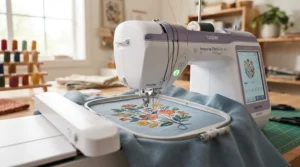
Speed is the story: up to 1,050 stitches per minute across a 300 x 200 mm field. Add 224 designs, 17 fonts, an LED needle-drop pointer in the embroidery foot, thread sensors and the ability to keep stitching while a bobbin winds. A 10,000-stitch design drops to roughly 10 minutes of pure stitching. That is a couple of minutes saved per item, and it adds up over a batch.
It suits the seller whose orders are mostly names, initials and small logos. The catch for businesses is the warranty. UK retailer listings for Brother’s home machines show three years, but only one year for commercial use. It is also embroidery-only, so pair it with any sewing machine.
I couldn’t find a meaningful independent review pool for this limited edition. UK retailer commentary is positive, but that is sellers’ opinion, not customer data.
Pros:
- ✅ Fast stitching for a single-needle machine
- ✅ LED pointer speeds accurate placement
- ✅ Two hoops included, up to 300 x 200 mm
Cons:
- ❌ Commercial-use warranty drops to one year
- ❌ Embroidery-only, so no sewing
Roughly £1,800–£2,400 depending on retailer and demo stock at the time of research; check current price. Strong speed-per-pound.
3. Brother Innov-is V5LE — the true sew-and-embroider workhorse
The V5LE earns its place with an 11¼-inch (285 mm) space to the right of the needle. That is room for bulky curtains and quilts. 🪡 Beyond a 300 x 200 mm embroidery field and 1,050 stitches per minute, it offers 652 sewing stitches, the ICAPS continuous pressure system for varying fabric thickness, 17 embroidery fonts and a knee lift.
That arm space matters if you make lined tote bags, aprons or cot quilts. You sew the item, then embroider it without switching machines. It remains single-needle, and the same one-year commercial warranty caveat applies. Some UK retailers have bundled PE-Design software at times, so compare bundles, not just headline prices.
UK sewing-press and retailer write-ups focus on the long arm and pressure system, but I couldn’t verify a large independent owner-review sample.
Pros:
- ✅ Genuine sewing and embroidery in one unit
- ✅ Generous 285 mm space right of the needle
- ✅ Large 300 x 200 mm field with 1,050 spm
Cons:
- ❌ Single-needle means manual colour changes
- ❌ Home-machine warranty shortened for commercial use
Around £3,300–£3,500 across UK dealers at the time of research; check current price. Best value for makers of sewn goods.
4. Brother PR1X — free-arm single-needle that reaches awkward items
The free arm is the point. It lets you reach sleeves, bags and other tubular items a flat-bed machine can’t. 🎒 The 300 x 200 mm field comes with 495 designs, 33 fonts (including a 3D puff font), a crosshair two-point positioning laser, a vertical bobbin you can change without removing the hoop and a side bobbin winder.
For small-batch bags, kids’ clothing and festival wear, that placement accuracy cuts wasted blanks. Be realistic, though. One UK dealer calls it a stepping stone because every colour change still means unthreading and rethreading. At 29.9 kg it also wants a proper stand or table. UK retailers sometimes list it as the PR1.
The sample is small. One US retailer page shows 4.9 across 20 ratings, some collected through a promotion. The recurring themes were hard-to-hoop items, the field size and first-time business owners.
Pros:
- ✅ Free arm for sleeves, bags and caps
- ✅ Laser positioning reduces misplaced designs
- ✅ Bobbin changes without removing the hoop
Cons:
- ❌ Manual colour changes slow multi-colour jobs
- ❌ Heavy, needs a sturdy stand
Roughly £4,000–£4,700 at UK dealers at the time of research; check current price. Fair value if free-arm work is your niche.
5. Brother PR680W — six needles and a production-minded brain
Six needles change everything. ⚡ Load six colours and the PR680W swaps and trims automatically, reaching up to 1,000 stitches per minute. The 10.1-inch HD touchscreen, 300 x 200 mm field, auto-resume after a stop or power cut, and admin/operator lock modes all point to workshop use. One UK dealer supplies four frames from 40 x 60 mm to 200 x 300 mm, and optional cap frames cover hats.
The lock modes let you stop staff altering settings, which matters once someone besides you runs the machine. Cap and cylinder work slows to around 400 stitches per minute. Dealer warranty terms listed one year return-to-base, and one UK dealer advertises free loan machines during repairs. Downtime is the hidden cost of any production machine.
I couldn’t verify a large independent owner-review pool. The strongest signal is dealer positioning of it as a business-grade step up.
Pros:
- ✅ Automatic colour changes and trimming
- ✅ Lock modes for multi-operator workshops
- ✅ Four frames from 40 x 60 to 200 x 300 mm
Cons:
- ❌ Needs a stand, adding to the budget
- ❌ Caps and cylinders run much slower
Around £6,600–£7,000 from UK dealers at the time of research; check current price. Sensible spend once orders are regular.
6. Brother PR1060W — ten needles and the widest field here
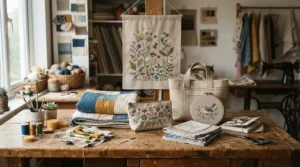
Ten needles and an 8 x 14-inch (roughly 360 x 200 mm) field make this the widest, most colour-capable machine in the line-up. 🏭 Brother quotes up to 1,000 stitches per minute, over 1,000 built-in designs, 50 fonts, My Design Center for on-machine drawing and editing, and camera-based placement preview.
Based on the spec comparison, the jump from six to ten needles pays off when most orders carry five or more colours, or when you keep regular customers’ palettes permanently loaded. School badges and club kits are the classic cases. Warranty is one year commercial, so budget for servicing. Some stands are sold separately.
The retailer page I found carries glowing testimonial copy, but a seller-curated page isn’t independent data. I couldn’t verify a robust owner-review sample.
Pros:
- ✅ Ten needles reduce rethreading drastically
- ✅ Widest embroidery field in this guide
- ✅ On-machine editing with camera preview
Cons:
- ❌ Roughly £10,000 is a serious commitment
- ❌ Large and heavy, so it needs dedicated space
Around £10,000 at UK dealers at the time of research; check current price. Worth it only with the order volume to match.
7. Husqvarna Viking Designer Epic 3 — the largest hoop with proper sewing
The Epic 3 offers a hoop of up to roughly 450 x 450 mm, a size most rivals can’t match. 👑 Its standard hoops run from 120 x 120 mm to 465 x 260 mm, and it adds embroidery and sewing projection, a reversible hoop, free-arm embroidery, 870+ stitches up to 9 mm wide, a 10.1-inch touchscreen and 310 mm of sewing space.
Projection means you preview placement on the fabric before stitching. That is valuable on one-off wedding or christening pieces where a remake is expensive. It is the clearest sewing embroidery machine for advanced embroiderers in this guide. But it is still single-needle, so it excels at bespoke commissions and large artwork rather than speed.
I couldn’t verify an independent owner-review sample from the sources used. The UK dealer page I checked didn’t show a clear price, so treat figures with caution.
Pros:
- ✅ Huge hoop reduces re-hooping on big designs
- ✅ Projection previews placement on fabric
- ✅ Full sewing capability with long working space
Cons:
- ❌ Premium price puts it out of most budgets
- ❌ Single-needle, so not built for volume
Premium tier; expect a serious investment and check current price. Brilliant for commissions, poor value for volume.
Top 7 Specs at a Glance
| Machine | Needles | Max speed | Warranty note | Best For |
|---|---|---|---|---|
| MC500E LE | 1 | Up to 860 spm | Check retailer | Low-volume personalisers |
| V3LE | 1 | Up to 1,050 spm | 3 years; 1 year commercial | Fast name-and-logo work |
| V5LE | 1 | Up to 1,050 spm | 3 years; 1 year commercial | Sewn goods plus embroidery |
| PR1X | 1 | Up to 1,000 spm (listed) | 3 years (UK retailer listing) | Free-arm and awkward items |
| PR680W | 6 | Up to 1,000 spm | 1 year return-to-base | First production machine |
| PR1060W | 10 | Up to 1,000 spm | 1 year commercial | High-colour volume work |
| Epic 3 | 1 | Check spec sheet | Check dealer | Bespoke, large-format work |
Notice how speed barely separates these machines, while needle count and warranty do. A V3LE at 1,050 stitches per minute isn’t dramatically faster than a PR680W at 1,000. The six-needle machine simply stops needing you between colours. If your orders carry one colour, don’t pay for needles you won’t use.
Custom Monogramming Workflow: From Customer Brief to Finished Piece
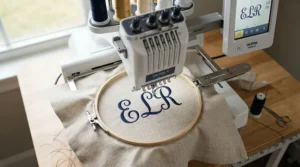
Custom monogramming is the bread and butter of small embroidery businesses, and it rewards a repeatable process. 🧵
- Agree the brief in writing. Confirm lettering, thread colour, placement and item before you touch a hoop. Send a digital proof; it protects you if a customer later disputes the result.
- Pick or digitise the lettering. Built-in fonts cover most custom monogramming. Scale them sensibly, because tiny letters blur into mush on towelling or knits.
- Choose stabiliser for the fabric. Stretchy knits need cut-away; woven cottons often take tear-away. A mismatch causes puckering.
- Stitch a test on scrap. It costs two minutes. A remade polo costs a blank, thread and your afternoon.
- Hoop, then check alignment. Use the LED pointer or laser, if your machine has one, to confirm the needle-drop point.
- Trim, press, inspect. Remove jump threads, press from the reverse and check the lettering reads cleanly.
In my view, the biggest time-saver is a saved template for repeat custom monogramming. Store each regular customer’s placement and settings so reorders take minutes, not half an hour.
Real-World Scenarios: Three UK Business Profiles
These are illustrative profiles, not real customers.
Hannah, spare-room gift seller (budget under £2,500). She sells personalised baby bibs and towels online, around 15–20 items a week, mostly names. A MC500E LE or V3LE fits. Name-only work needs one thread colour, so single-needle manual changes cost her almost nothing, and the V3LE‘s extra speed trims a few minutes per batch.
Mo, bag maker (budget around £3,500–£5,000). Mo cuts, sews and embroiders canvas totes for local markets. The V5LE lets him do both jobs on one machine. If his totes become tubular or sleeved items like pouches, the PR1X‘s free arm is worth a look, paired with his existing sewing machine.
Sam, club and school kit supplier (budget £7,000+). Sam handles 40–60 polos and hoodies weekly, many with three to five colours. Here a PR680W removes constant rethreading. If her customer palettes keep growing and she hires help, the PR1060W becomes the logical next step.
The pattern is clear: needle count follows colour count, and colour count follows customer type. Don’t buy for the business you hope to have in three years. Buy for the orders already in your inbox, with a realistic upgrade path.
Buyer’s Decision Framework: If This Is You, Choose That
- If you mostly do names and initials on a tight budget, choose a single-needle embroidery-only machine such as the MC500E LE or V3LE, because one colour needs no automatic swapping.
- If you sew products and embroider them, choose the V5LE, because one combo saves space, money and setup time.
- If you embroider bags, sleeves and small tubular items, choose the PR1X, because the free arm reaches what flat-beds can’t.
- If orders routinely carry three or more colours, choose the PR680W, because automatic colour changes free you to do other work.
- If you keep many customers’ palettes loaded and run constant volume, choose the PR1060W, because ten needles cut rethreading further.
- If you take large bespoke commissions, choose the Epic 3, because the huge hoop and projection reduce remake risk.
Treat this as a priority checklist. Decide your most common order type first, then choose the cheapest machine that serves it without friction.
✨ Ready to Find Your Match?
🔍 Click any highlighted machine name to check current pricing and availability. Compare your shortlist against the orders you already have, then choose the machine that pays for itself fastest.
How to Choose a Sewing Embroidery Machine for Small Business
- Start with your typical order. Names and monograms need a small field and one colour. Jacket backs need roughly 300 x 200 mm or more. Buy for the common job, not the rare one.
- Decide sewing versus embroidery-only. If you sell sewn goods, a combo like the V5LE or Epic 3 saves a second machine. If not, embroidery-only machines tend to give more speed or field per pound.
- Count your colours. Single-needle machines are fine for one or two colours. Beyond that, the six-needle PR680W or ten-needle PR1060W save real labour.
- Check the warranty for commercial use. Several home machines drop to one year when used for business. Price that into your budget.
- Budget for the extras. Stands, extra hoops, cap frames, stabiliser, thread and software all add up.
- Think about service downtime. A dealer offering loan machines can matter more than a slightly cheaper sticker price.
Sewing and Embroidery Machine for Monogramming: What to Look For
Not every sewing and embroidery machine for monogramming is equal. Look first at font count and scaling. The MC500E LE offers six fonts, the V3LE and V5LE 17, the PR1X 33 and the PR1060W 50. More fonts mean fewer reasons to buy or digitise lettering separately.
Next, check how small the lettering can go before it blurs. A common rule of thumb is to avoid letters much below about 5–6 mm tall on fabric, though stabiliser and thread choice matter. Test on scrap before promising customers tiny script.
Placement tools matter too. An LED pointer or laser, as on the V3LE, V5LE and PR1X, helps centre initials on napkins, shirt cuffs and towel corners. For anyone selling sewn linen or aprons, a combo like the V5LE lets you hem and monogram without moving fabric between machines.
Finally, consider your hoop range. Monogramming usually means small hoops, so confirm the machine accepts them cleanly. Extra-large fields are wasted on a single initial.
Production-Ready Hoop Size: Matching Frames to Orders
A production-ready hoop size is one that covers around 80 per cent of your orders without re-hooping, and can be loaded quickly. 📏 Left-chest logos and names typically sit in a small hoop around 100 x 100 mm. Bags, cushions and jacket backs call for a field around 300 x 200 mm.
Compare what each machine offers. The V3LE ships with 300 x 200 mm and 200 x 200 mm hoops. The V5LE includes 300 x 200 mm and 100 x 100 mm. A UK dealer supplies the PR680W with four frames from 40 x 60 mm to 200 x 300 mm. The Epic 3 goes from 120 x 120 mm up to its giant hoop.
Caps are a special case. A Brother cap frame offers just 130 x 60 mm of embroidery area, so check logo height before promising hats. Magnetic hoops speed hooping of thick items, though they cost extra. The best production-ready hoop size is whichever stops you wasting minutes on every order.
Embroidery Digitising Software: What You Actually Need
Embroidery digitising software converts artwork into a stitch file that tells the machine where to stitch, trim and jump. A machine can’t read a JPEG, and a pretty logo isn’t automatically a good stitch design. Skilled digitising accounts for fabric, thread and tension.
You have options. Brother’s PE-Design 11 adds multiple sewing directions and outline conversion, while PE-Design Plus 2 targets beginners by converting images to stitch data automatically. Janome bundles Embroidery Editor and AcuStitch with some MC500E LE packages. Husqvarna Viking supplies creativate software with the Epic 3, and the PR1060W offers My Design Center for on-machine editing. Third-party packages such as Embrilliance and Embird are also widely used.
Start simple. Built-in fonts and on-screen editing handle names and monograms. Buy embroidery digitising software when customers send logos, because auto-conversion often needs manual cleanup. Check file formats too: Janome uses .JEF, Brother uses PES, and conversion tools exist but add a step.
Sewing Embroidery Machine for Advanced Embroiderers: When to Step Up
A sewing embroidery machine for advanced embroiderers should remove limits, not add buttons. The Epic 3 is the clearest example: giant hoops, projection preview, reversible hooping and free-arm embroidery are tools for bespoke, high-value pieces.
Advanced users also gain from on-machine editing. The PR1060W‘s My Design Center and camera preview help skilled operators adjust designs without returning to a PC. Meanwhile, the PR680W gives experienced embroiderers speed and colour capacity without a ten-needle price.
Step up when your constraint is no longer skill but time. If you’re rethreading five times per item, a multi-needle earns its keep. If you’re re-hooping big designs in pieces, a larger field does. If neither applies, a mid-range machine such as the V5LE is usually the smarter spend. Advanced doesn’t have to mean expensive; it means matching the tool to the bottleneck.
Long-Term Cost & Maintenance: The Real Maths
The sticker price is only the start. Needles, bobbins, stabiliser, thread, stands and servicing all add up. Software may add more, and multi-needle machines need regular cleaning and oiling per the manual.
Tax matters too. HMRC’s trading allowance lets you earn up to £1,000 of gross trading income before registering for Self Assessment, and VAT registration applies above a turnover threshold, so check GOV.UK’s guidance on setting up as a sole trader for current figures. Keep every receipt; machines, software and consumables are usually business expenses.
| Option | Upfront cost | Control over quality | Turnaround | Best For |
|---|---|---|---|---|
| Own embroidery machine | High | Full | Fast once set up | Repeat orders and personalisation |
| Outsourcing to a local embroiderer | Low | Limited | Depends on supplier | Testing demand before investing |
| Heat transfer or vinyl | Low to medium | Moderate | Fast | One-off designs and short runs |
Outsourcing is a sensible test. If demand stays thin, you’ve lost nothing. Heat transfer is cheap but lacks embroidery’s premium feel. Owning a machine wins once repeat orders make the machine’s hours cheaper than a supplier’s margin.
Selling Personalised Goods in the UK: Rules to Know
Personalised items sit under slightly different consumer rules. Under the Consumer Contracts Regulations, the usual 14-day cancellation right doesn’t apply to goods made to a customer’s specification or clearly personalised. Which? explains this in its guide to cancelling online orders, listing bespoke and personalised goods among items you can’t cancel.
That exemption doesn’t excuse poor work. Faulty or misdescribed goods still carry your legal responsibility. State your terms plainly on your shop page, and get written approval of lettering and proof images before stitching.
Two extra cautions. Children’s items attract stricter safety expectations, so check with Trading Standards before selling. And check licence terms for built-in and downloaded designs before putting them on goods you sell, because licensed characters and some commercial designs can be restricted. This isn’t legal advice; confirm specifics with a professional.
FAQ
❓ Can a home sewing embroidery machine handle commercial orders?
❓ How much should I budget for a small business embroidery machine?
❓ Is single-needle or multi-needle better for custom monogramming?
❓ Do I need embroidery digitising software on day one?
❓ Which hoop sizes should I buy first?
Final Verdict
There’s no single winner, only a best fit. If your work is mostly names and gift personalisation, the MC500E LE or V3LE gives you capable single-needle stitching without a huge outlay. If you sew products as well, the V5LE is the sensible all-rounder. The PR1X earns its keep on awkward, tubular items, while the PR680W is the first machine here that truly behaves like a production tool. The PR1060W suits high-colour, high-volume workshops, and the Epic 3 is a luxury for bespoke, large-format work.
My honest steer: buy for the orders already waiting, not the ones you dream of. Check warranty terms for commercial use, budget for stands, hoops and software, and treat every price here as a range to verify. Pair that with a clear digitising plan and a proper proofing routine, and the machine will pay its way far faster than any spec sheet suggests. 🧵
Recommended for You
- Sewing Embroidery Combo: 7 Best Machines For UK Crafters (2026)
- Sewing And Embroidery Machine: 7 Best Buys (Avoid Mistakes) 2026
- Combination Sewing Machines For Beginners: 7 Best Buys (2026)
Disclaimer: This article contains affiliate links. As an Amazon Associate, I earn from qualifying purchases. If you purchase products through these links, we may earn a small commission at no additional cost to you.
✨ Found this helpful? Share it with your friends! 💬🤗
